
 Italian
  English
  Arabic
  French
  German
  Russian
  Spanish
 What is Custom Stainless Steel CNC Machining?
Custom stainless steel Lavorazione CNC is a process that uses computer numerical control (CNC) technology to precisely machine stainless steel materials. Through high-precision cutting, milling, and forming operations, customized parts or products that meet specific design requirements are manufactured.
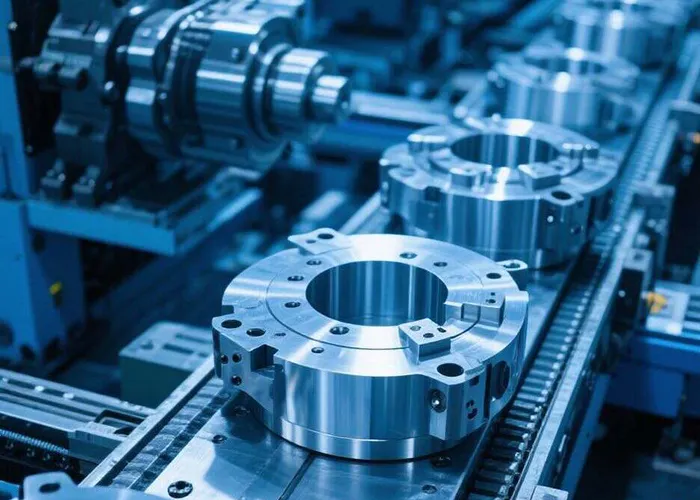
Stainless steel is a popular material for CNC machining because it offers excellent strength and corrosion resistance while still being workable under machine tools. This process enables the production of complex or intricate stainless steel components with tight tolerances. In practice, a design is created in CAD/CAM software, converted into code, and then sent to a CNC milling machine or lathe to precisely remove material.
Main Features
- CNC machines follow programmed paths to cut metal, ensuring repeatable accuracy and complex geometries.
- Ideal for prototypes or tailored parts, CNC machining can quickly adapt to design changes and short runs.
- Stainless steel’s good machinability (especially in certain grades) and uniformity make it well-suited to CNC milling and turning.
Why Choose Stainless Steel for CNC Projects?
1. Exceptional Strength and Toughness
- Stainless steels have tensile strengths ranging from 500 MPa (for 304) to over 1,200 MPa (for 17-4 PH), making them suitable for structural or load-bearing components.
- Martensitic and precipitation-hardened types (e.g., 420, 17-4 PH, 15-5 PH) can be heat-treated to hardness levels above 40 HRC, ideal for wear-resistant parts.
- Austenitic grades like 304 and 316 offer excellent ductility and impact resistance, even at low temperatures.
Tensile Strength Comparison (Typical Range) :
Grado | Tensile Strength (MPa) | Yield Strength (MPa) |
304 | 515–750 | 205–290 |
316 | 485–700 | 170–300 |
17-4 PH | 930–1,310 | 720–1,100 |
420 (Hardened) | 655–1,100 | 275–690 |
303 | 500–750 | 190–360 |
2. Corrosion Resistance in Harsh Environments
Stainless steel contains 10.5% or more chromium, which forms a passive oxide layer that resists corrosion. Many alloys also contain nickel and molybdenum to improve resistance against acids, chlorides, and seawater.
- 316 stainless steelis widely used in marine and chemical environments due to its molybdenum content.
- Duplex stainless steels (e.g., 2205)offertwice the yield strength of 304/316and superior resistance to chloride-induced stress corrosion cracking.
- Passivated or electropolished stainless partscan operate reliably in medical, pharmaceutical, and food environments with long service life.
Salt Spray Test (ASTM B117) Resistance :
- 304: ~24–96 hours before corrosion signs
- 316: Up to 1,000+ hours
- 17-4 PH (passivated): ~500–1,500 hours
3. High Temperature and Cryogenic Resistance
- Stainless steelsretain mechanical properties over a wide temperature range.
- Austenitic grades (e.g., 304, 316) can withstandtemperatures up to 870°C (1,600°F).
- Some ferritic and duplex grades are stable at temperatures exceeding1,000°C.
- In cryogenic applications, 304/316 maintain toughness and ductilitydown to -196°C.
Working Temperature Ranges :
| Grado | Max Operating Temp | Cryogenic Suitability |
| 304/316 | ~870°C | Excellent |
| 17-4 PH | ~595°C | Moderate |
| 430 | ~815°C | Poor |
4. Sustainability and Recyclability
- Stainless steel is100% recyclable, with more than 60% of modern stainless steel made from recycled content.
- Its long lifespan also reduces waste compared to shorter-lived metals.
A stainless part that lasts 10–20 years in service offsets more environmental cost than frequent aluminum replacements.
CNC Machining Tech Types for Stainless Steel
Stainless steel parts can be produced on virtually every type of CNC machining center. Key equipment and techniques include :
1. CNC Milling (3- to 5-axis)
Multi-axis milling machines handle complex 3D shapes and tight tolerances on stainless blocks. (Machine shops commonly use 3- and 5-axis mills for stainless components.)

2.CNC Turning (Lathes)
CNC lathes (including Swiss-style turning centers) are used for cylindrical parts like shafts, bushings, and threaded components. These machines can achieve fine finishes on long bars of stainless. (Hubs notes its shops use CNC turning machines for custom stainless parts.)

3.CNC Drilling and Tapping
Hole-making on stainless uses CNC drilling (often with peck cycles to clear chips) and tapping (for internal threads). Special high-helix drills or slowed speeds are used to handle the material’s toughness.

4. Grinding & Honing
Surface or cylindrical grinding may be applied after initial machining to meet tight surface finish or roundness requirements. Stainless is ground to achieve smooth flat surfaces or very fine tolerances.
CNC Machining Stainless Steel Types
Stainless steel comes in many grades and families, each with unique properties. Common stainless steel categories and examples used in CNC machining include :

Austenitic (300-series) – e.g.303,304/304L,316/316L.
These are non-magnetic alloys rich in nickel and chromium, with high corrosion resistance and good ductility. Grade 303 contains sulfur for free-machining (exceptional machinability). 304/304L and 316/316L are general-purpose grades (316 adds molybdenum for better marine corrosion resistance).
Martensitic – e.g.420,440C,416.
These steels can be hardened for strength. For example, 420 and 440C are heat-treatable cutlery steels (420 achieves very high hardness when quenched). Grade 416 is a high-machinability martensitic alloy (magnetic with sulfur).
Precipitation-Hardened (PH) – e.g.17-4 PH,15-5 PH.
These alloys (martensitic with added Cu/Nb) can be heat-treated to very high strength. For instance, 17-4 PH (also called Type 630) can reach around 44 HRC hardness while retaining good corrosion resistance. 15-5 PH offers higher toughness and transverse properties than 17-4 PH.
Ferritic – e.g.430.
Ferritic stainless steels are chromium-rich, magnetic alloys with moderate corrosion resistance. Grade 430 is used for parts needing some corrosion resistance and magnetism (e.g. kitchen appliances).
Duplex – e.g.2205 Duplex.
Duplex alloys combine austenitic and ferritic phases, giving very high strength and excellent corrosion resistance (especially to chlorides). 2205 is a common duplex alloy, suitable for demanding environments and high pressures.
Surface Finishes Options for Stainless Steel Parts

Finish Type | Process Description | Resulting Surface & Key Benefits | Typical Applications |
As-Machined | Machined parts are left in their original state after CNC milling or turning. No additional finishing is applied. | Surface may show visible tool paths and minor burrs. Roughness typically Ra 3.2 μm or more depending on tooling and machine condition. | Internal components, prototypes, low-cost or hidden parts where appearance is not critical. |
Bead Blasting | High-pressure stream of fine glass or ceramic beads is blasted over the part to clean and texture the surface. | Produces a uniform matte or satin finish with reduced glare. Hides machining marks, removes surface contamination. Slightly increases surface roughness. | Consumer products, enclosures, medical housings, and aesthetic surfaces requiring uniform dull finish. |
Brushed (Satin) | Abrasive belts or brushes are run along the part surface in one direction to create parallel linear grain. | Creates a smooth satin sheen with directional lines. Ra value typically around 0.5–1.5 μm. Visually appealing and fingerprint-resistant. | Architectural trim, appliance panels, handrails, and visible stainless surfaces requiring a decorative appearance. |
Electropolishing | Electrochemical removal of surface metal using acid bath and current; selectively removes high points on microscopic level. | Smooths,brightens, and passivates the surface. Greatly enhances corrosion resistance and cleanliness. Reduces Ra to < 0.1–0.4 μm depending on base finish. | Medical implants, surgical tools, semiconductor parts, food processing equipment. |
Passivation | Immersion in citric or nitric acid to remove free iron and enhance the chromium oxide passive layer without altering the metal’s appearance. | No visible change. Increases corrosion resistance without affecting tolerance or dimensions. Surface is chemically clean and free of iron residues. | Aerospace, pharmaceutical, food-grade components, and any parts exposed to moisture or chemicals. |
Powder Coating | Electrostatic application of dry polymer powder, followed by curing in an oven to form a hardened surface. | Adds durable, colorful outer coating resistant to impact, abrasion, and UV. Thickness varies (~50–150 μm). Slight texture; not suitable for tight-tolerance areas. | Outdoor components, decorative parts, consumer goods, enclosures, and protective housings. |
Black Oxide | Chemical process converting iron on the surface to a thin layer of magnetite (Fe₃O₄). Often includes an oil sealant. | Produces a matte black finish that adds minimal thickness. Offers mild corrosion resistance. Mainly cosmetic or for light-duty protection. | Tools, firearms, fasteners, and components needing anti-glare and aesthetic black appearance. |
Electroless Nickel Plating | Chemical deposition of a nickel-phosphorus alloy over the stainless surface without electrical current. Uniform coating even on complex geometries. | Bright, metallic appearance with excellent wear resistance, corrosion protection, and dimensional uniformity. Thickness 5–50 μm. | Precision parts, molds, electronics housings, sliding or moving stainless components. |
Each finish should be chosen based on the part’s functional and aesthetic requirements. For example, medical or food parts often use electropolishing and passivation for cleanliness, while industrial parts might only need bead blasting or paint.
Applications of Custom Stainless Steel CNC Machining
Stainless steel CNC machined parts are used across countless industries wherever strength, corrosion resistance, or hygiene are important. Typical applications include :
- Industrial Equipment: Machine parts, robotics components, heavy machinery linkages, pressure vessels, and hydraulic cylinders that require toughness and longevity. For example, stainless gears, shafts, and bearings in industrial robots or construction equipment.
- Medical: Surgical instruments, implants (e.g. bone screws, joint components), and medical devices where biocompatibility and sterilization are required. The alloy’s cleanability and corrosion resistance are key.
- Automotive & Transportation: Components like exhaust systems, fuel rail parts, valve bodies, and turbocharger components that must withstand heat, vibration, and corrosion.
- Food & Beverage: Processing equipment, tanks, mixers, and fittings. Stainless steel resists acids and moisture in food processing, and is easy to clean.
- Marina: Valves, pump parts, shafts, and fittings exposed to seawater. Stainless’s chloride corrosion resistance makes it ideal for boats, offshore equipment, and marine hardware.
Challenges of Stainless Steel CNC Machining
Working with stainless steel demands extra care. The material’s properties create several machining challenges:
Hardness & Tool Wear: Stainless steel is hard and tough, which causes cutting tools to dull quickly. It has low thermal conductivity, so heat builds up at the cutting zone instead of dissipating. Excessive heat accelerates tool wear and can ruin surface finish.
Work-Hardening: Alloys like 304 and 316 tend to work-harden – they become harder where they are cut. As the cutter engages, the surface hardens, making subsequent cutting even more difficult. This can lead to rapid tool wear and requires slower feeds or special tool paths.
Poor Machinability: Many stainless grades have inherently low machinability numbers. They resist chip formation and can produce stringy chips, which foul tools. Burrs also form easily, making it hard to get smooth edges.
Heat Generation & Distortion: The heat from cutting can thermally distort both tool and workpiece. Thin or complex stainless parts may warp or bend under machining stresses. Tight clamping and careful speed/feed control are needed to minimize deformation.
Surface Finish Difficulties: Achieving a fine surface finish requires extra steps. Stainless steel tends to scratch and mar, so extra passes or finishing processes (polishing, electropolishing) are often needed to meet aesthetics or sealing requirements.
Advanced techniques and the right equipment are critical. Manufacturers often use high-feed carbides, low cutting speeds, abundant coolant, and chip-breakers to combat these issues (see Quick Tips below).
Quick Tips for Machining Stainless Steel
Use the Right Tooling: Choose hard, heat-resistant tools.Carbide or cobalt drills and end mills with polished flutes are best for stainless, as they withstand abrasion. Coated tools (e.g. TiAlN) further reduce heat. Avoid heavily worn tools, and use toolpaths that minimize dwell.
Control Heat: Run at moderate speeds and use abundant coolant or cutting fluid. Stainless steel retains heat, so coolant helps dissipate it and extend tool life. Occasionally pause machining if the part gets too hot.
Optimize Chip-Breaking: Use chip-breaking or peck cycles especially in drilling. Long “stringy” chips are common; peck drilling (retracting slightly every pass) and high-helix cutters help clear chips and prevent them from entangling. Inspect and replace tools when chips change from short to long.
Secure Fixturing: Clamp workpieces firmly. Thin walls or slender parts easily deflect, so extra supports or slower feeds are advisable. Optimize feeds and depths to balance cutting forces; a worn tool or too aggressive cut can deflect a part out of tolerance.
Choose the Best Grade: If possible, use a free-machining alloy (like 303 or 416) when complex machining is needed. These grades chip more cleanly. For high-precision parts, annealing or stress-relieving the stainless before finish-machining can also reduce work-hardening.




