
 Italian
  English
  Arabic
  French
  German
  Russian
  Spanish
 Difference between AM and Lavorazione CNC has become one of the most discussed topics in the modern manufacturing world as industries continue to evolve toward digital and intelligent production. Both technologies represent two fundamentally different manufacturing philosophies — one subtractive and one additive.
What is CNC Machining?
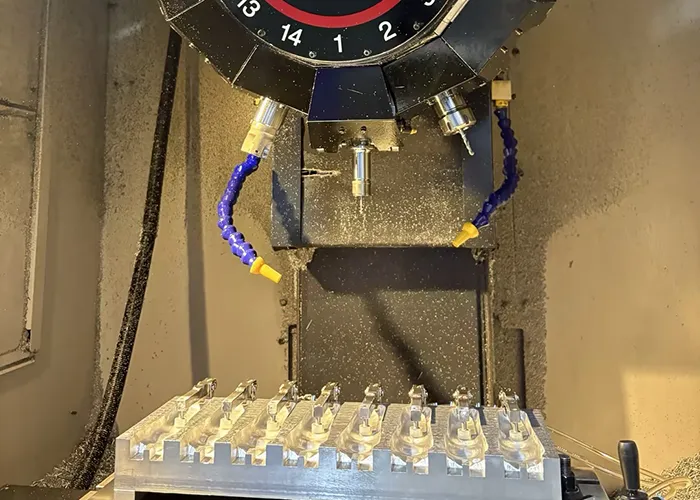
CNC machining, or Computer Numerical Control machining, is the core technology of traditional manufacturing after the digital revolution. Its essence is a “subtractive manufacturing” process, in which a solid piece of material (blank) is shaped into the desired part by cutting, milling, drilling, and grinding away excess material.
The basic concept of CNC machining is to use computer-generated digital instructions to control the automated machining process of a machine tool. Its core lies in the fact that designers or engineers first program the part’s geometric shape and processing parameters into specific program codes (most commonly G-code), which are then input into the machine tool’s numerical control system. The numerical control system, serving as the “brain” of the machine, precisely interprets these instructions and drives the machine’s tools and worktable to perform preset relative movements, thereby achieving precise cutting of the workpiece. This method greatly improves machining accuracy, repeatability, and efficiency, making it the cornerstone of modern precision manufacturing.
Main Process of CNC Machining
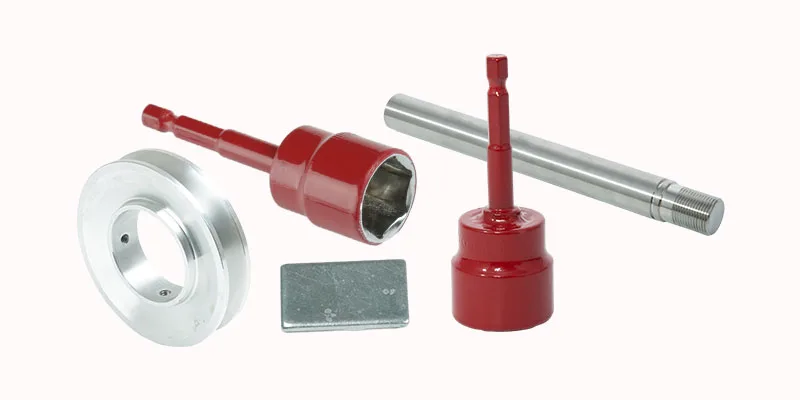
The process of CNC machining is rigorous and standardized, usually including the following key steps:
Step 1: Design and Programming (CAD/CAM)
First, a 3D model of the part is created using computer-aided design (CAD) software. Then, process engineers perform a detailed process analysis based on the part’s drawings and technical requirements, determining the machining plan (such as selecting tools, setting cutting speeds, and feed rates). Finally, computer-aided manufacturing (CAM) software or manual programming is used to convert these machining paths and parameters into G-code programs recognizable by CNC machine tools.
Step 2: Machine Setup and Program Input
The generated CNC program is transferred to the control system of the CNC machine via USB, network, or other means. At the same time, the operator must install and fix the workpiece blank on the machine and install and calibrate the required cutting tools. The accuracy of this stage is critical to the final part’s precision.
Step 3: Machining Execution and Monitoring
After starting the program, the CNC machine automatically executes the code instructions, controlling the cutting tool to perform cutting, drilling, milling, and other operations on the workpiece according to the preset path. During machining, real-time monitoring may be required to ensure smooth operation and to handle unexpected issues promptly.
Step 4: Quality Inspection
After machining, the finished part is removed from the machine and measured using precision instruments such as coordinate measuring machines (CMM), calipers, and micrometers to check dimensional and geometric tolerances, ensuring it meets design specifications.
Common CNC Machining Equipment
CNC technology has been widely applied to various types of machine tools, forming a large family of CNC equipment. Common examples include:
- CNC Milling Machine / Machining Center: Used for machining complex surfaces and contours.
- CNC Lathe: Mainly used for machining rotational parts such as shafts and disks.
- CNC Grinder: Used for high-precision and high-surface-finish finishing operations.
- CNC Drilling Machine: Specialized for hole-making operations.
- CNC Wire EDM (WEDM): Uses electrical discharge erosion to cut conductive materials.
- CNC Engraving Machine: Used for fine engraving work.
Together, these devices form the hardware foundation of modern precision manufacturing.
What is Additive Manufacturing (AM)?
Additive Manufacturing (AM), more commonly known as “Stampa 3D,” represents a manufacturing paradigm fundamentally opposite to CNC machining. Instead of removing material, it builds a three-dimensional object by adding material layer by layer, hence the term “additive manufacturing.”
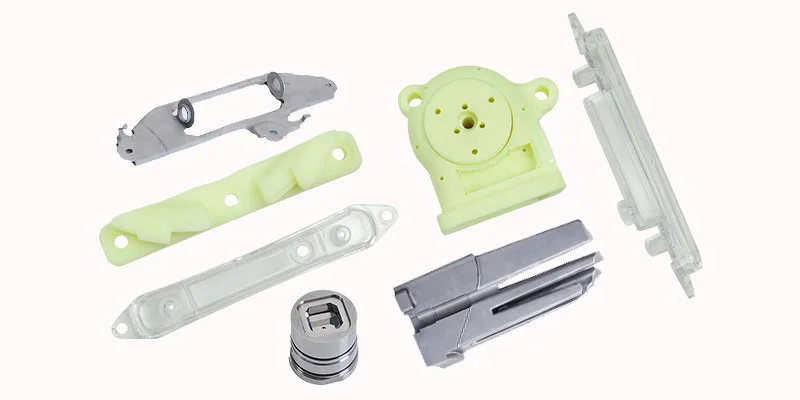
The core principle of additive manufacturing is “layered fabrication and accumulation.” The process begins with a digital 3D model (such as a CAD file). This model is “sliced” into numerous thin 2D cross-sections by specialized software. The AM equipment then reads these cross-section data and uses materials (such as metal powder, photosensitive resin, or plastic filament) as “ink” to print layer by layer, fusing or curing them into a complete three-dimensional object. This process grants unprecedented design freedom, allowing the creation of complex structures that are difficult or even impossible to produce with traditional methods.
Main Process of AM
Although additive manufacturing encompasses many different techniques, the basic workflow shares common steps:
Step 1: 3D Modeling and Slicing
As with CNC, the first step is to create or obtain a CAD model of the part. The model is then imported into specialized AM preprocessing software, converted into standard formats such as STL (Standard Tessellation Language), and digitally “sliced” to generate instruction files containing layer-by-layer contour data.
Step 2: Layer-by-Layer Construction
The AM equipment reads the slicing file and deposits and solidifies the material layer by layer through specific process methods (such as laser melting, material extrusion, or binder jetting). For example, in a powder bed system, the device first spreads a thin layer of powder. Then, an energy source (such as a laser or electron beam) selectively melts the designated areas of that layer. After one layer is complete, the build platform lowers, a new powder layer is spread, and the process repeats until the part is fully built.
Step 3: Post-Processing
After the part is removed from the machine, it usually requires a series of post-processing steps. These may include removing support structures (used to support overhanging sections during printing), surface grinding or polishing to improve surface finish, heat treatment to eliminate internal stress and enhance material properties, or machining to achieve higher dimensional accuracy.
Common AM Technologies
Additive manufacturing is a broad category that includes various specific techniques. Depending on the materials and energy sources used, mainstream technologies include:
- Fused Deposition Modeling (FDM): Heats and melts thermoplastic filaments (such as ABS or PLA) and extrudes them through a nozzle to build the object layer by layer. It is the most widely used desktop-level 3D printing technology.
- Selective Laser Melting (SLM): Uses a high-power laser to selectively melt metal powders (such as titanium alloy, aluminum alloy, or stainless steel) in a powder bed, layer by layer, to produce dense metal parts. It is one of the leading metal AM technologies.
- Directed Energy Deposition (DED): Feeds material (powder or wire) through a nozzle while using a focused energy source (laser, electron beam, or plasma arc) to melt and deposit it on a substrate or existing component. It is often used for large-scale part fabrication and repair.
- Other Technologies: Including stereolithography (SLA), selective laser sintering (SLS), electron beam melting (EBM), and binder jetting. Each is suited to specific materials and application scenarios.
Main Difference Between AM and CNC Machining
As representatives of subtractive and additive processes, CNC machining and additive manufacturing differ across every stage of production. Understanding these differences is key for enterprises in making technological choices and process planning.
| Comparison Dimension | CNC Machining (Subtractive Manufacturing) | Additive Manufacturing (AM / 3D Printing) |
| Core Principle | Removes excess material from a solid block to form the desired shape. | Builds objects by adding material layer by layer. |
| Material Utilization | Low. Most of the material is cut into chips, resulting in significant waste. | Extremely high. Only the required material for the part is used, with minimal waste. |
| Machining Accuracy & Surface Quality | High. Can achieve micron-level tolerances and excellent surface finish. | Relatively low. “Stair-stepping effect” often results in rough surfaces, requiring post-processing to improve precision and finish. |
| Ability to Handle Geometric Complexity | Limited. Difficult to machine complex internal cavities, hollow structures, or lattice shapes due to tool accessibility constraints. | Very strong. Easily manufactures highly complex geometries, enabling integrated functional structures and lightweight designs. |
| Production Cycle | Fast for simple parts in batch production, but complex parts require long programming and setup times—overall lead time may reach several weeks. | Very fast for single or small-batch complex parts; from design to finished product in hours or days, with no mold required. |
| Cost Structure | Suitable for mass production to spread fixed costs. Single-piece or small-batch production is expensive. Requires skilled operators, resulting in high labor costs. | Cost-effective for small-batch and customized production. Equipment and material costs may be high, but no mold is required and automation is high. |
| Selezione del materiale | Wide. Can process almost all engineering materials, including metals, plastics, composites, and wood. | Relatively limited. Each AM technology corresponds to specific material systems (e.g., specific grades of metal powders or photopolymers), though the range is continuously expanding. |
Comprehensive Analysis:
From a material perspective, additive manufacturing has unparalleled advantages in conserving expensive materials (such as titanium alloys in aerospace). Its material utilization rate can be much higher than that of traditional manufacturing, even reducing raw material waste by up to 40%. In contrast, the chips and scraps generated in CNC machining are often difficult to recycle, resulting in significant resource waste.
From a precision and quality perspective, CNC machining remains the gold standard for high-precision manufacturing. The surface integrity and dimensional accuracy of CNC parts are still beyond the direct capabilities of most current AM technologies. Therefore, CNC remains the first choice or a necessary post-processing step for key components requiring tight fits and smooth surfaces.
From a design freedom and production cycle perspective, additive manufacturing completely liberates design constraints. It enables design-for-function rather than design-for-manufacturability, especially in prototype validation, customized production, and small-batch complex product manufacturing. AM can respond to market needs with speed and flexibility that traditional methods cannot match — a complex prototype that might take weeks on a CNC machine could be delivered within a day using AM.
Conclusione
CNC machining (CNC) and additive manufacturing (AM) represent two fundamentally different yet equally important technological pathways in modern manufacturing systems. As a mature subtractive manufacturing method, CNC—with its high precision, high efficiency, and wide material adaptability—dominates standardized, large-batch precision part production. Meanwhile, additive manufacturing, as a disruptive additive technology, is revolutionizing product development, customization, and complex structure fabrication with its unmatched geometric freedom, high material utilization, and rapid responsiveness.
Looking ahead, the relationship between the two is not a zero-sum game of “one replacing the other.” The more realistic scenario is that they will be chosen and configured based on specific application needs—such as part complexity, production volume, cost budget, and precision requirements. Ultimately, hybrid manufacturing, which integrates both technologies, will become the mainstream of advanced manufacturing, pushing human production capabilities to a new level. Enterprises must deeply understand the characteristics and boundaries of both technologies to formulate optimal manufacturing strategies in future competition.




