
 English
  Arabic
  French
  German
  Italian
  Russian
  Spanish
 Aluminum parts can be made with several casting methods. Two common choices are die casting and sand casting. Both use molten aluminum, but the way the metal enters and takes shape inside the mold is very different.
In aluminum die casting vs. sand casting, die casting is usually the better choice for high-volume parts that need tight dimensions, thin walls, and a smooth surface. Although sand casting has lower tooling costs but works well for prototypes. It also works well with low-volume orders, large parts, and designs with complex internal cavities. The right choice depends on the part, not just the material.
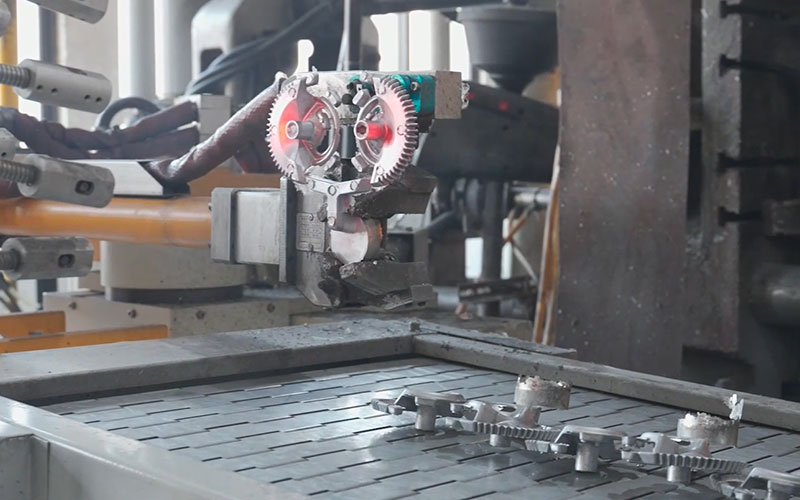
Aluminum Die Casting vs. Sand Casting at a Glance
| Factor | Aluminum Die Casting | Sand Casting |
| Mold | Reusable steel die | Sand mold used for one casting |
| Metal filling | Injected under high pressure | Usually poured by gravity |
| Tooling cost | Higher | Lower |
| Production speed | Fast | Slower |
| Best volume | Medium to very high volume | Prototype to low or medium volume |
| Dimensional accuracy | High | Lower |
| Surface finish | Smooth | Rougher |
| Thin walls | Very suitable | More difficult |
| Large parts | Limited by machine and die size | Very suitable |
| Internal cavities | Possible, but tooling can become complex | Easy to create with sand cores |
| Design changes | More costly after tooling is made | Easier and cheaper |
| Repeatability | Very high | Lower than die casting |
| Secondary machining | Often reduced | Often more machining is needed |
The North American Die Casting Association defines die casting as a process in which liquid metal is injected under high pressure into a reusable steel die. It also notes that the process can produce close tolerances, thin walls, repeatable parts, and good surface finishes.
The American Foundry Society describes sand as one of the main molding materials used in metalcasting. Sand molds can form the outside of a part, while sand cores can create internal spaces such as passages and cavities.
What Is Aluminum Die Casting?
Aluminum die casting uses a steel mold called a die.
Molten aluminum is pushed into the die cavity under pressure. The metal fills the shape, cools, and becomes solid. The die then opens, and the part is ejected. The same die can be used again for many production cycles.
Aluminum is normally processed in a cold-chamber die casting machine. This is because the temperature of molten aluminum is too high for the injection system used in common hot-chamber machines. Die casting has strong repeatability. Once the die and process settings have been established, manufacturers can produce a large number of parts with similar dimensions and surface quality.
The process also works well for parts with ribs, bosses, mounting points, holes, and thin sections. Some features that would otherwise require separate parts can be included directly in the casting. NADCA notes that die casting can reduce the need for machining and can combine several features into one component.
Scojet provides custom die casting services for aluminum, zinc, and magnesium alloy parts. Its has aluminum die casting capabilities include mold development, high-pressure casting, CNC machining, finishing, inspection, and assembly. Scojet lists a possible tolerance down to ±0.1 mm for suitable projects, although actual tolerance depends on the part geometry, size, alloy, and tooling design.
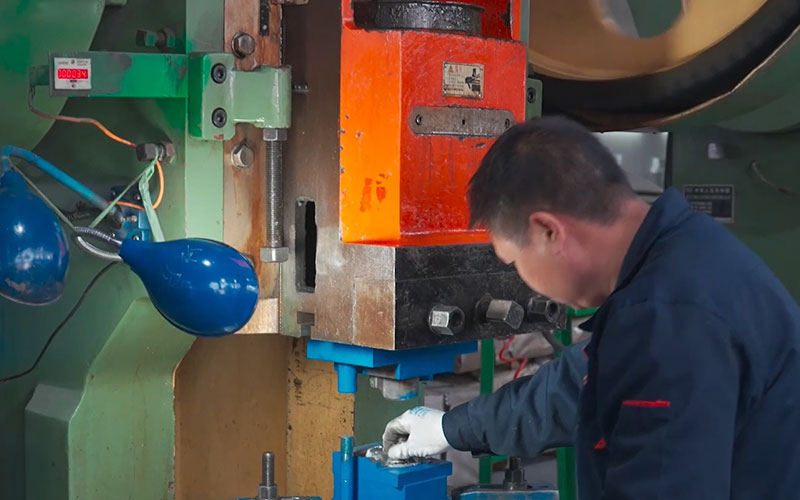
What Is Sand Casting?
Sand casting uses a mold made mainly from prepared foundry sand and binder.
A pattern first creates the required shape in the sand. The pattern is removed. Molten aluminum is then poured into the cavity. After the aluminum cools, the sand mold is broken apart to remove the casting. A new mold has to be made for the next part.
This sounds less efficient than a permanent steel die, but sand casting has an important advantage. Its tooling is much simpler. A manufacturer does not need to invest in an expensive hardened steel die before production starts.
Sand cores also make it possible to form difficult internal passages. This is useful for housings, pumps, engine components, manifolds, and other parts that contain hollow sections. The American Foundry Society notes that sand casting remains a widely used metalcasting method and that sand cores are commonly used to form internal voids.
Tooling Cost
Tooling is one of the biggest differences between aluminum die casting and sand casting. A die casting tool has to withstand pressure, repeated heating, cooling, and many production cycles. It can include slides, ejector pins, cooling channels, gates, and other features. That makes the initial tool more expensive. Sand casting normally needs a pattern and, where necessary, core boxes. These are less expensive than a high-pressure die. For 20 prototype parts, building a complex die may make little financial sense. For 100,000 repeat parts, the situation changes. The cost of the die can be spread across a much larger production run. This is why tooling price should never be judged by itself. The useful figure is the total cost per acceptable part over the expected production volume.
Production Volume and Speed
Die casting has a major advantage when a project requires large quantities.
The steel die does not have to be rebuilt after every shot. Machines can repeat the filling, cooling, opening, and ejection cycle quickly. Sand casting needs more mold preparation for each casting. Production is therefore slower. For prototypes, replacement parts, custom machinery, and small production runs, this slower process may not be a problem. Its lower tooling investment can be more important. For automotive components, consumer products, electrical housings, and other repeat parts, die casting often becomes more economical as volume rises.
Surface Finish
Look at an unfinished sand casting and an unfinished die casting side by side. The difference is normally easy to see. The surface of a sand mold has a grain structure. That texture can transfer to the casting. A machined steel die has a much smoother cavity surface. It can therefore produce a smoother as-cast part. NADCA identifies good surface finish as one of the main advantages of die casting. Die cast surfaces can also accept several types of finishing with limited preparation. This matters if the component will be painted, powder coated, plated, or used where appearance is important.
Dimensional Accuracy and Repeatability
A steel die holds its shape from one production cycle to another. A sand mold is made again for each casting. Small variations can occur during mold preparation, core placement, pouring, and cooling. Die casting therefore has an advantage where dimensions have to remain consistent across thousands of parts. Better as-cast accuracy can also reduce CNC machining. Sand casting can still produce accurate components. Critical surfaces, holes, sealing faces, and bearing locations are often machined after casting.
Wall Thickness and Part Detail
Die casting can handle thinner walls and finer features than sand casting. The metal enters the die under pressure, so it can fill narrow spaces, ribs, and small details more easily. Scojet lists 0.8 mm as a possible minimum wall thickness for some aluminum die-cast parts. In practice, the right wall thickness depends upon several things like the size and shape of the part, the alloy, and how far the metal has to flow inside the die. Sand casting usually needs thicker sections because the metal fills the mold more slowly.
Part Size
Sand casting has an advantage when parts become very large. A sand mold can be built around a large pattern without requiring a die casting machine with enough clamping force to hold a steel tool closed under high injection pressure. Large industrial housings, heavy equipment parts, pump bodies, and similar components are often good candidates for sand casting. Die casting is better suited to parts that fit within the size, shot capacity, and clamping limits of the selected machine.
Design Changes
An engineering drawing often changes during product development. Sand casting is relatively forgiving at this stage. A pattern can often be changed or replaced without rebuilding an expensive production die. Changes become more serious after a die casting tool has been completed.
Some die modifications are possible. Others require major tool rework or a new die. If the design has not been frozen, sand casting or another prototype process can be useful before investing in production tooling.
Which Process Is Better for Aluminum Parts?
There is no single winner in aluminum die casting vs. sand casting.
Choose aluminum die casting by keep the following things in mind
- Production volume is high.
- Parts must remain consistent across large batches.
- Thin walls are important.
- A smooth as-cast surface is required.
- The component has detailed external features.
- Reduced machining can justify higher tooling cost.
Fast repeat production matters.
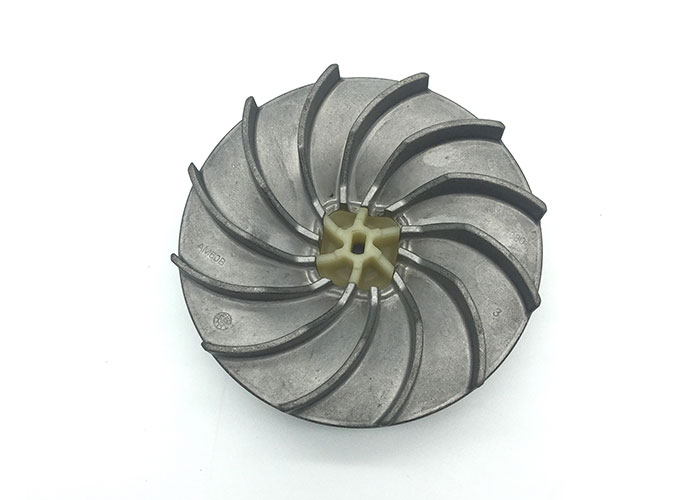
Choose sand casting; keep the following things in mind
- Only a few parts are required.
- The product is still at the prototype stage.
- Tooling budget is limited.
- The casting is very large.
- The design requires complex sand cores.
- Frequent design changes are expected.
- Production speed is less important than tooling flexibility.
A buyer should also check alloy choice, mechanical requirements, porosity limits, heat treatment, machining, surface treatment, annual volume, and expected tool life before making the final process decision.
Aluminum Die Casting vs. Sand Casting Cost
It is easy to say that sand casting is cheaper. That statement is only partly correct. Sand casting normally has the lower starting cost. Die casting can have the lower unit cost when production volume is high enough.
Consider the whole project:
Total production cost = tooling + casting + machining + finishing + inspection + assembly + scrap and quality costs
A cheap mold does not always produce the cheapest finished part. A die cast component may need less machining and less surface preparation. It may also combine several previously separate parts into one casting. Sand casting can still have the cost advantage for a small order because there are too few parts to recover the cost of a die.
Common Applications
Aluminum die casting is commonly used for automotive housings. It also includes brackets, electronic enclosures, heat-management parts, power-tool components, appliance parts, and industrial equipment.
Sand-cast aluminum is common in large housings, pump bodies, prototypes, industrial machinery, low-volume replacement parts, and castings with large or complicated internal cavities. The material may be aluminum in both cases. The production needs are different.
Final Choice
The main question is not as simple as it seems: “Which casting process is better? Has acomplex answer.
Ask how many parts you need, how large the part is, how thin the walls are, what tolerances matter, and how much you can invest in tooling. Sand casting gives more flexibility at low volume and works well for large or core-heavy parts. Aluminum die casting needs more investment at the start, but it has clear advantages in production speed, dimensional consistency, thin-wall capability, surface quality, and high-volume manufacturing. If your aluminum component is intended for repeat production, you can send the drawing, expected annual quantity, alloy requirements, tolerances, and finishing needs to the manufacturer before selecting the process. Those details usually make the choice much clearer and save you from future hassles.
FAQs
Is aluminum die casting stronger than sand casting?
Not automatically. Strength depends on the aluminum alloy, casting process, porosity, cooling conditions, heat treatment, geometry, and other factors. The casting method alone does not determine final strength.
Is die casting cheaper than sand casting?
No it is not cheap because die casting usually has higher tooling costs. Its unit cost can become lower at larger production volumes because the same steel die has repeated use, and production cycles are fast. Sand casting is often more economical for prototypes and small batches.
Which process has a better surface finish?
Die casting normally produces a smoother as-cast surface because the aluminum solidifies against a machined metal die. Sand casting carries more texture from the sand mold. NADCA lists excellent surface finish as an advantage of modern die casting.
Can sand casting make complex aluminum parts?
Yes. Sand cores can create complex internal cavities and passages. This is one of the major advantage of sand casting for certain industrial parts.
Which process is better for mass production?
High-pressure aluminum die casting is generally better suited to mass production. It uses reusable tooling, has fast cycle times, and provides strong dimensional repeatability.
Can die-cast aluminum parts be machined after casting?
Yes. Die-cast aluminum parts can have CNC machining after casting where a project requires tighter dimensions, precision holes, threads, sealing faces, or other critical features.




