
 English
  Arabic
  French
  German
  Italian
  Russian
  Spanish
 In modern manufacturing, die casting stands as a cornerstone for producing high-precision components, with aluminum, magnesium, and zinc alloys dominating the landscape. Each material offers unique advantages: magnesium leads in lightweight innovation (density: 1.74 g/cm³), aluminum balances strength and versatility, while zinc excels in cost-effective precision. The choice between them hinges on critical factors like weight reduction demands, thermal/mechanical performance, and budget constraints. For instance, aerospace and automotive sectors prioritize magnesium for its 30% weight savings over aluminum, whereas consumer electronics often favor zinc for intricate thin-walled designs (as thin as 0.4mm). This blog will dissect their properties, process challenges, and ideal applications, empowering engineers to optimize material selection for next-generation projects.
Basic Features Comparison
| Features | Aluminum Alloy Die Casting | Magnesium Alloy Die Casting | Zinc Alloy Die Casting |
| Density | 2.63-2.85g/cm³ | 1.74 ~1.8g/cm³(The lowest density among the three) | 6.3-6.7g/cm³(The highest density among the three) |
| Melting Point | 660℃ | 650℃ | 385℃ |
| Flowability | Good (suitable for medium complexity) | Excellent (can form 0.5mm thin wall) | Best (suitable for complex and fine parts) |
| Tensile Strength | 200-560MPa | 250-400MPa | 280-440MPa |
| Specific Strength | Medium | Highest (lightweight advantage) | Lowest (due to high density) |
Differences in Process Performance
1. Forming Efficiency
- Magnesium Alloy: solidification speed is 50% faster than aluminum alloy, and the production cycle is the shortest
- Zinc Alloy: the lowest melting point, suitable for rapid mass production
- Aluminum Alloy: strong versatility, high process maturity
2. Mold Life
- Magnesium Alloy mold life is the longest (reducing 30% thermal shock)
- Zinc Alloy is easy to stick to the mold and requires frequent maintenance
3. Process Difficulties
- Magnesium Alloy: SF6 gas is required for explosion prevention, and the surface needs oxidation treatment
- Aluminum Alloy: shrinkage defects need to be controlled, suitable for high-pressure shrinkage feeding process
- Zinc Alloy: easy to age and embrittle, and the content of lead and cadmium impurities needs to be controlled
Application Scenario Adaptation
Aluminum Alloy Die Casting: automobile engine bracket, building doors and windows, electronic product housing

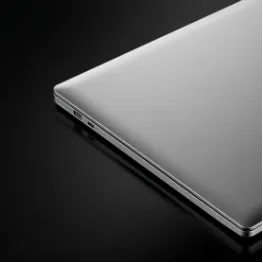
Magnesium Alloy Die Casting: 3C product thin-walled parts (laptop housing), aerospace structural parts, automobile steering wheel bracket
Zinc Alloy Die Casting: hardware handles, bathroom accessories, decorations (low cost and large quantity)

Comprehensive Advantages and Disadvantages
1. Aluminum Alloy Die Casting
✅ Advantages: moderate cost, good corrosion resistance, anodized
❌ Disadvantages: lower strength than deformed aluminum alloy, high difficulty in shrinkage control
2. Magnesium Alloy Die Casting
✅ Advantages: lightweight benchmark (30% lighter than aluminum), good heat dissipation, shock absorption
❌ Disadvantages: high raw material cost, strict explosion-proof measures required
3. Zinc Alloy Die Casting
✅ Advantages: lowest cost, high molding accuracy (tolerance ±0.05mm)
❌ Disadvantages: poor corrosion resistance, easy failure in high/low temperature environment
Selection Recommendations
Preferential Aluminum Alloy: aluminum alloy has the widest applicability, suitable for parts with complex structures and surface treatment
Prioritize Magnesium Alloy: 3C/automobile lightweight, high heat dissipation demand scenarios
Select Zinc Alloy: low-cost decorative parts, complex thin-walled non-load-bearing parts




