
 English
  Arabic
  French
  German
  Italian
  Russian
  Spanish
 Modern snow blowers rely heavily on simple yet highly reliable mechanical control systems to ensure safe, precise, and responsive operation in harsh winter environments. Among these systems, push-pull control cables play a critical role in transmitting operator input from the handle controls to various functional mechanisms distributed throughout the machine. Thanks to their ability to transmit linear motion over distance, accommodate flexible routing, and operate effectively under vibration, moisture, and low temperatures, push-pull cables have become an indispensable solution in snow blower design.

From engaging the auger and traction drive to adjusting chute direction, controlling engine speed, and selecting travel gears, push-pull control cables enable intuitive, real-time interaction between the operator and the machine’s mechanical systems. This article provides a detailed analysis of the specific applications of push-pull control cables in snow blowers, examining their working principles, mechanical interfaces, and functional requirements across key subsystems.
1. Auger Clutch Control
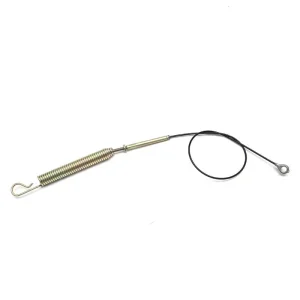
Function Description: The auger is the core component at the front of the snow blower responsible for collecting and shredding accumulated snow. The auger clutch controls the rotation and stoppage of the auger. The operator engages or disengages power to the auger by manipulating a dedicated clutch lever on the control handle.
Operation Method and Push-Pull Cable Principle:
- Most snow blower auger clutch levers operate on a “squeeze to engage, release to disengage” logic.
- When the operator firmly grips the auger clutch lever, the opposite end of the lever pulls on the inner core cable of a push-pull cable. The other end of this cable connects to the auger’s power engagement mechanism, typically an idler pulley. Pulling the inner cable causes the idler arm to pivot, thereby tensioning the drive belt connecting the engine to the winch. Power transmission begins, and the winch rotates. When the operator releases the handle, the return spring on the idler arm pushes the arm back, slackening the belt, interrupting power transmission, and stopping the winch rotation. Simultaneously, this thrust force is transmitted back through the push-pull cable’s inner core cable, causing it to reset. This entire process perfectly utilizes the push-pull cable’s bidirectional transmission capability (primarily using “pull” for operation and “push” for reset).
2. Traction Drive Clutch Control
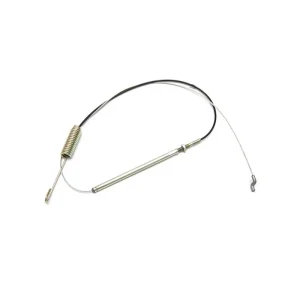
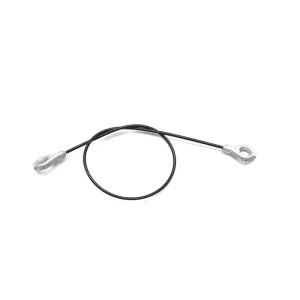
Function Description: The traction drive clutch controls power to the snow blower’s wheels or tracks, enabling forward, reverse, or stop movements.
Operation and Push-Pull Cable Principle:
- Similar to the auger clutch, the traction drive clutch is controlled by a lever on the handle, typically operating on a “push down to engage, release to disengage” principle.
- The operator presses the drive clutch lever, pulling or pushing the inner cable through the push-pull cable. The other end of this cable connects to the snow blower’s transmission or friction disc drive system. This action either engages the friction disc with the drive disc or connects a specific gear set within the transmission. Consequently, engine power is transmitted to the wheels/tracks, propelling the snow blower. Upon releasing the handle, the return spring disengages the drive mechanism, allowing the push-pull cable inner cable to reset, halting the snow blower’s movement. This control cable must precisely transmit travel to ensure complete engagement or disengagement of the friction disc, preventing slippage or dragging.
3. Chute Direction and Deflector Angle Control
Function Description: The chute determines the direction (left/right rotation) of ejected snow, while the deflector controls the height and distance of projection.
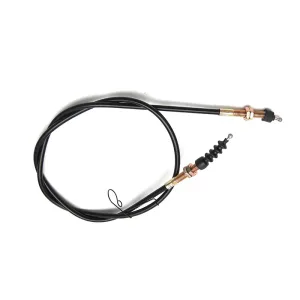
Operation Method and Push-Pull Cable Application Principle:
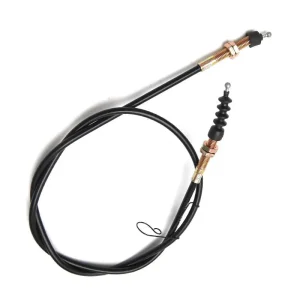
- Mechanical Remote Control: Many mid-range snow blowers feature remote control functionality, allowing operators to adjust the chute from the operator’s position. These systems represent an ideal application for push-pull cables.
- Chute Rotation:A crank handle or lever on the control panel connects via one or two push-pull cables to a gear mechanism at the chute’s base. Turning the crank or moving the lever pushes or pulls the cable inner core, driving the gear to rotate the chute left or right. Some control systems, such as “Quick Shoot™,” likely achieve their rapid, direct response characteristics through efficient push-pull cables.
- Deflector Angle:Similarly, a lever or trigger on the control panel connects via a push-pull cable to the deflector’s hinge mechanism. The operator moves the lever up or down, pushing or pulling the push-pull cable inner core to tilt the deflector plate upward or downward, thereby altering the snow discharge trajectory.
4. Throttle Control
Function Description: The throttle controls engine RPM, thereby influencing the power output of the auger and drive system.
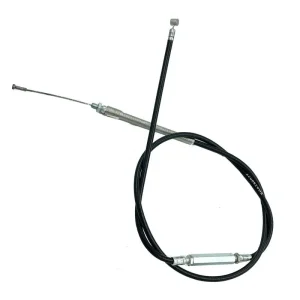
Operation and Push-Pull Cable Principle:
- This is a classic and common push-pull cable application. The throttle lever on the control panel connects directly to the engine carburetor’s throttle valve via a push-pull cable.
Pushing the throttle lever forward pulls the cable inner core, opening the carburetor throttle wider to increase air and fuel intake, raising engine RPM. Pulling the throttle lever backward pushes the inner cable (or allows it to be pulled back by a spring on the carburetor), closing the throttle and reducing engine speed. The cable’s precision and low friction are critical for achieving smooth throttle response.
5. Gear Shifting Control
Function Description: For snow blowers with multiple forward and reverse gears, the shift lever selects different travel speeds.
Operating Principle and Push-Pull Cable Application:
- The shift lever connects to the transmission’s selector/shift arm via one or more push-pull cables.
- When the operator moves the shift lever from one gear to another, this action is precisely transmitted to the transmission through the push-pull cables. For example, pushing from 1st to 2nd gear may extend the inner cable a specific distance; pulling back from 2nd to 1st gear retracts the inner cable. Each gear corresponds to a defined position of the inner cable. Therefore, this push-pull cable must exhibit minimal elongation and backlash to ensure precise engagement in every gear.
About SCOJET – Control Cable Solutions
SCOJET is a China-based control cable manufacturer and OEM/ODM service provider with decades of experience in the mechanical cable industry. SCOJET offers a comprehensive control cable series that includes throttle, clutch, brake, shift, and other push-pull control cables designed for a wide range of outdoor power equipment and industrial machinery. Their product range supports custom lengths, fittings, and environmental specifications to meet the performance needs of different mechanisms and operating conditions.
If you are looking for a reliable control cable supplier or need a customized push-pull cable solution for your snow blower or power equipment project, contact SCOJET today.




