
 English
  Arabic
  French
  German
  Italian
  Russian
  Spanish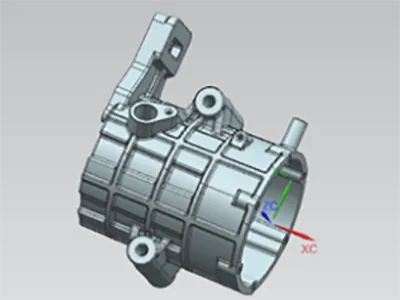
Case Overview
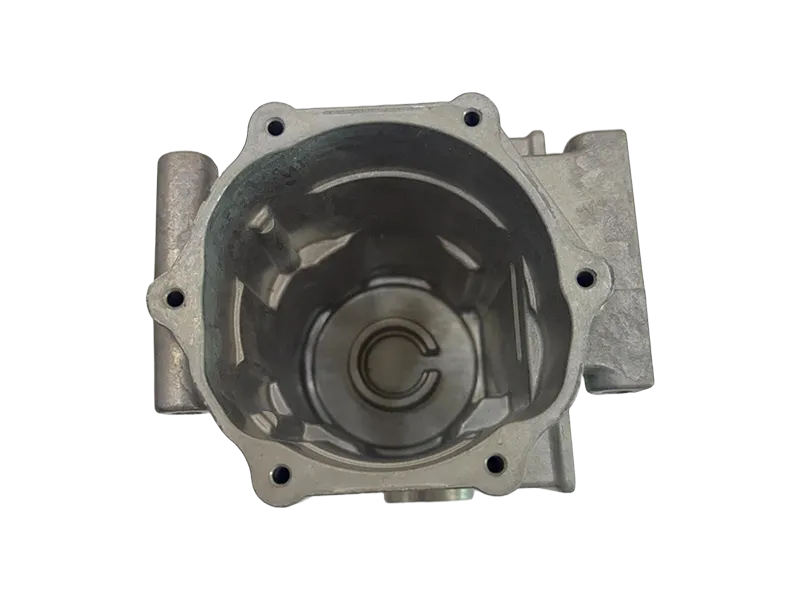
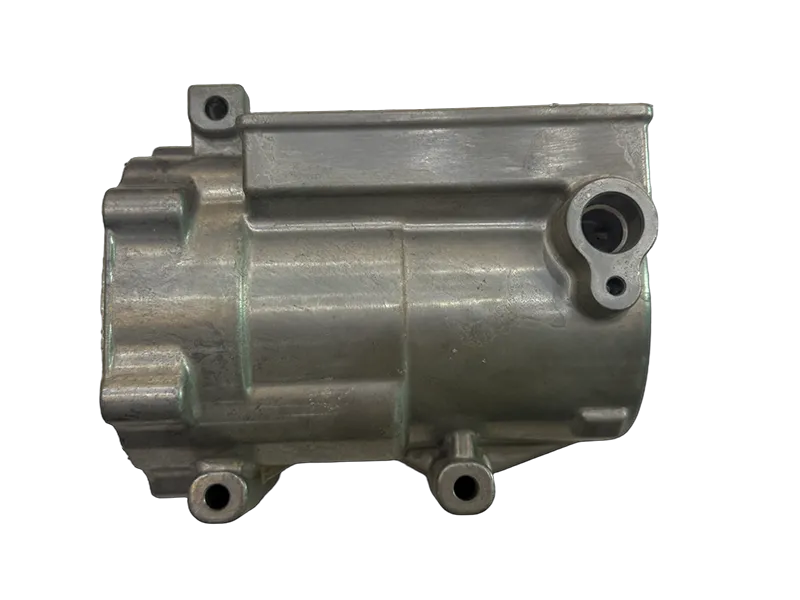
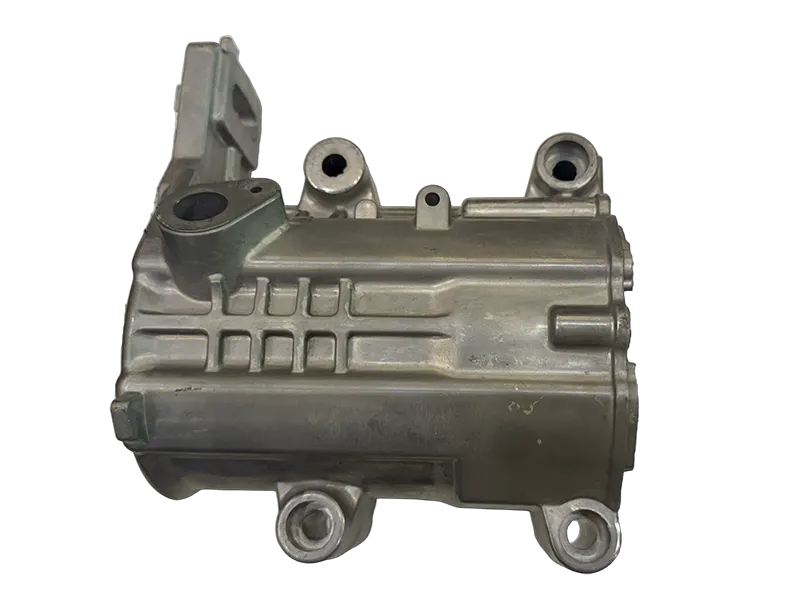
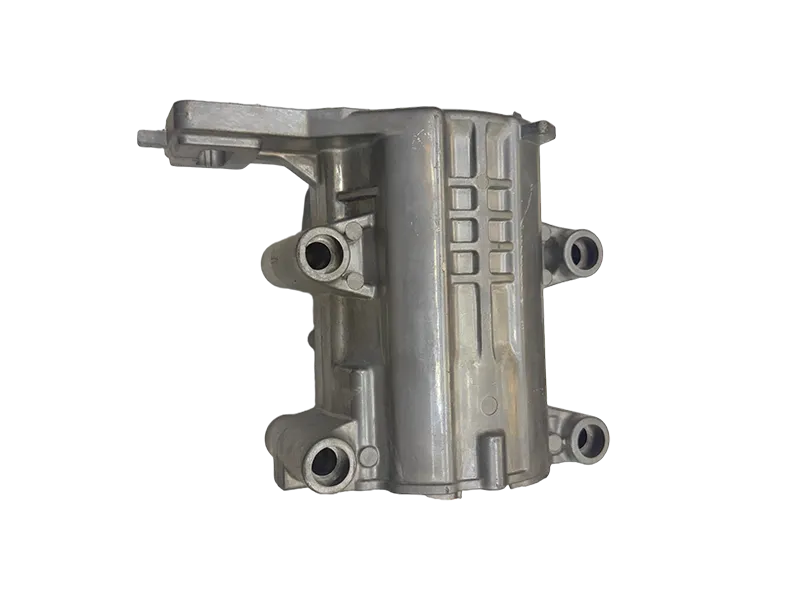
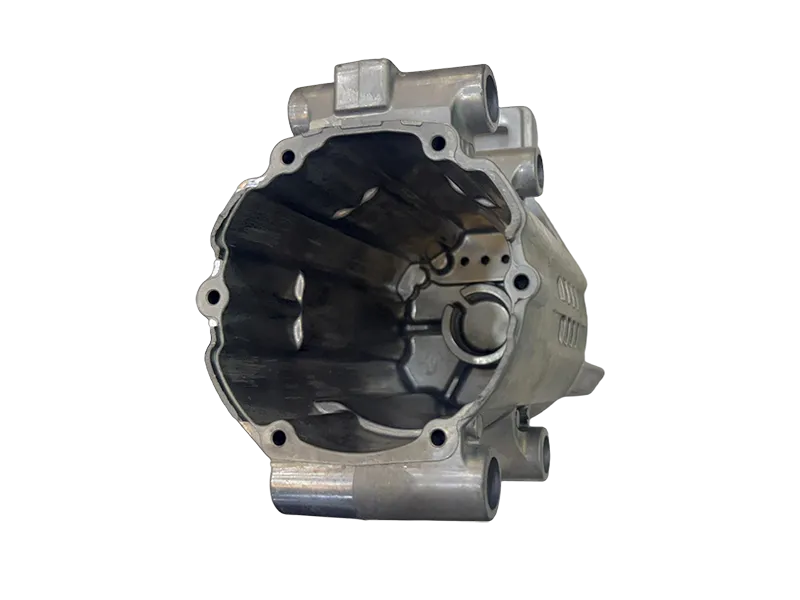
This case covers two automotive electric air conditioning compressor housings manufactured by die casting.
In new energy vehicles, the compressor housing is a critical structural component of the electric air conditioning system. It houses moving components such as the orbiting scroll, fixed scroll, and rotor.
The part must withstand high-pressure refrigerant conditions and therefore requires excellent internal density, air tightness, and dimensional accuracy.
Part Information
| Item | Product 1 | Product 2 |
| Part Name | Electric Vehicle Air Conditioning Compressor Housing | |
| Application Industry | New Energy Vehicle (Electric Air Conditioning System) | |
| Material | ADC12 Aluminum Alloy | |
| Dimensions | 154 × 202 × 135 mm | 161 × 148 × 151 mm |
| Weight | 1.32 kg | 1.07 kg |
| Average Wall Thickness | 5 mm | 5.5 mm |
| Manufacturing Process | Die Casting | Die Casting |
| Surface Treatment | Shot Blasting | Shot Blasting |
| Main Quality Inspection Method | X-ray Inspection (Non-destructive Testing) | X-ray Inspection (Non-destructive Testing) |
Material Characteristics of ADC12 Aluminum Alloy
ADC12 aluminum alloy is the die casting alloy selected for this project. Its main chemical composition and mechanical properties are as follows:
- Chemical Composition: Si 9.6%-12%, Cu 1.5%-3.5%, Mg ≤0.3%, Fe ≤1.3%, Zn ≤1.0%, balance Al
- Tensile Strength: 220-240 MPa (achievable with rheo-die casting process)
- Elongation: 0.8%-1.2%
- Hardness: ≥90 HBW
- Density: Approximately 2.68 g/cm³
- Features: Good fluidity and excellent filling capability, suitable for complex thin-wall housing components with a good balance between performance and cost.
Core Challenge: High Pressure Air Tightness
The electric vehicle air conditioning compressor housing is a high-reliability sealing structural component. During operation, its interior is exposed to refrigerant pressure, which places strict requirements on the internal quality and air tightness of the casting.
During actual operation, the housing is filled with refrigerants such as R134a and R1234yf. If defects such as pores, shrinkage cavities, or micro cracks exist inside the casting, they may be exposed during subsequent machining processes and form continuous leakage paths, resulting in refrigerant leakage and affecting the normal operation of the compressor.
According to industry application requirements, this type of compressor housing typically needs to pass an air tightness test with no leakage under a pressure condition of approximately 3 MPa. Therefore, any potential internal defects may cause the product to fail inspection.
Solution
To address the challenges of air tightness, internal density, and complex structure forming of the electric vehicle air conditioning compressor housing, this project adopted a combined process solution of vacuum-assisted die casting + local squeeze feeding to improve casting internal quality and reliability in critical areas.
1. Vacuum-Assisted Die Casting
To address potential porosity issues during the die casting process, a vacuum venting system was designed in the mold to reduce the residual gas content inside the cavity before and during injection.
Main optimization measures include:
- Installing vacuum vent blocks to improve cavity venting performance;
- Optimizing vacuum distance and vacuuming process to enhance exhaust efficiency;
- Combining side gating with vacuum venting design to improve molten metal filling;
- Reducing gas entrapment during the filling process.
Through vacuum assistance, the internal density of the casting was improved, reducing the impact of porosity on air tightness performance.
2. Local Squeeze Feeding Technology
For thick-wall hot spot areas such as mounting bosses and bearing seats of the housing, squeeze pins were installed at corresponding positions in the mold.
During the solidification stage of die casting, localized secondary pressure was applied to compensate for shrinkage and improve the material density in thicker sections.
Main measures include:
- Installing squeeze pins in critical thick-wall areas;
- Applying localized pressure feeding according to product structure requirements;
- Improving feeding performance during solidification shrinkage;
- Reducing the risk of internal defects such as shrinkage cavities and porosity.
This process effectively improves the internal quality of ADC12 aluminum alloy die castings and enhances product air tightness reliability.
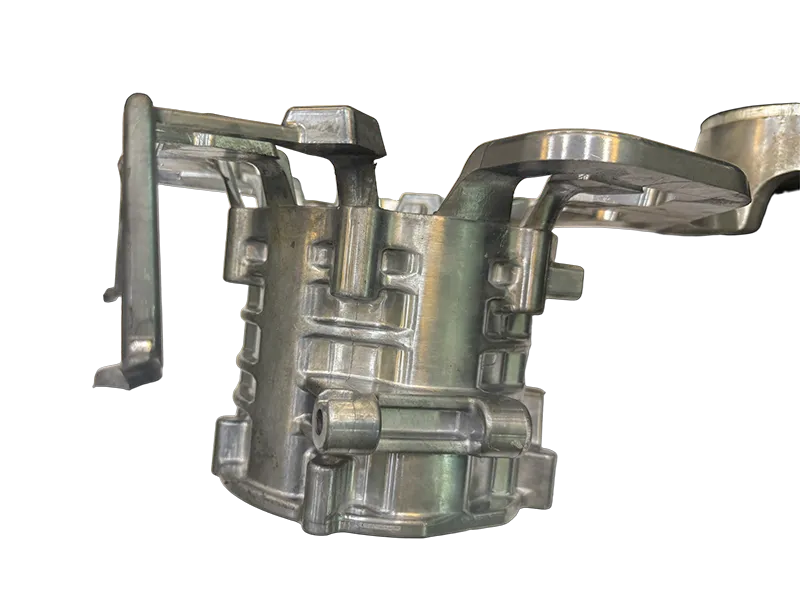
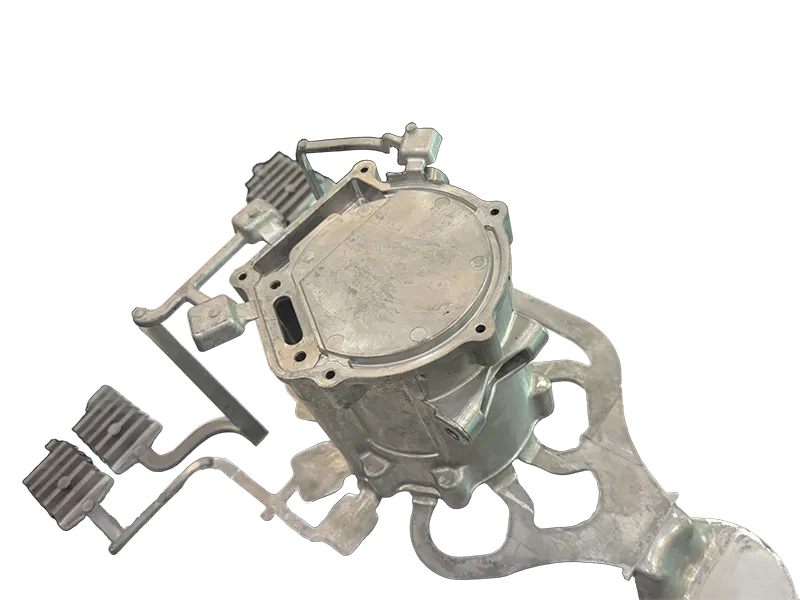
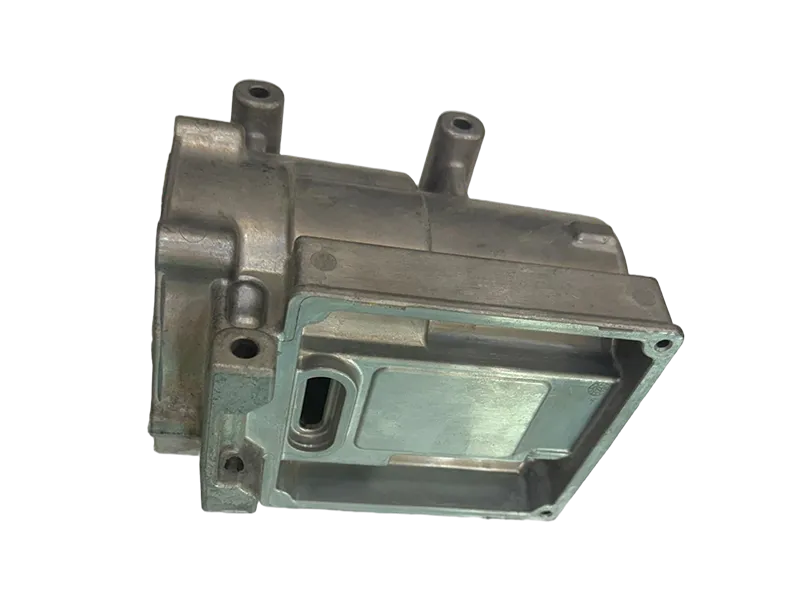
Finished Product Showcase
Case Summary
Through the combined process of vacuum-assisted die casting and local squeeze feeding, this case successfully addressed the stringent high air tightness requirements of the electric vehicle air conditioning compressor housing.
| Key Technology | Problem Solved |
| Vacuum Die Casting + Vacuum Vent Block | Reduced residual gas inside the cavity and lowered porosity rate |
| Local Squeeze Feeding (Double Squeeze Pins) | Eliminated shrinkage defects in thick-wall hot spot areas |
| ADC12 Material Selection | Balanced fluidity and mechanical properties with high cost-effectiveness |
| Shot Blasting | Improved surface hardness and cleanliness |
| X-ray Inspection | Ensured internal quality compliance with defect level ≤ Grade 2 |
