
 English
  Arabic
  French
  German
  Italian
  Russian
  Spanish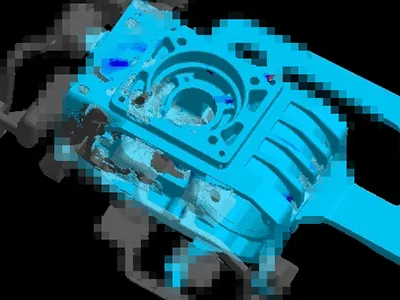
Case Overview
This case involves an explosion-proof enclosure for a mining/industrial flameproof valve electric actuator (referred to as the explosion-proof box). It is a core safety housing component of the flameproof valve electric actuator. The explosion-proof box usually contains electrical components such as motors, control circuits, and terminal blocks, and is used in industrial sites with explosive gases or dust environments, including petroleum, chemical, coal mining, metallurgy, and wastewater treatment industries.
The enclosure must have explosion-proof capability: when a combustible gas explosion occurs inside, it must withstand the explosion pressure without damage and cool and extinguish the flame through the gap of the flameproof joint surface, preventing the explosion from propagating into the external explosive environment.
Part Information
| Item | Parameter |
| Part Name | Flameproof Actuator Explosion-Proof Enclosure |
| Application Industry | Petroleum / Chemical / Coal Mining / Metallurgy / Wastewater Treatment — Flameproof Valve Electric Actuator |
| Material / Grade | ADC12 (Die-Cast Aluminum Alloy) |
| Product Dimensions | 200 mm × 250 mm × 150 mm |
| Product Weight | 2500 g |
| Manufacturing Process Combination | Die Casting → Machining (Rough Machining + Finish Machining) → Powder Coating |
| Surface Treatment Process | Powder Coating (Epoxy Resin Powder Coating) |
| Quality Inspection Method | Coordinate Measuring Machine (CMM) Inspection + X-ray Inspection |
ADC12 Material Selection Basis
The explosion-proof box adopts ADC12 aluminum alloy, which complies with common industry practices. Aluminum alloys such as ZL103, ZL104, and ADC12 are commonly used for explosion-proof lamps and explosion-proof enclosures. The magnesium content of ADC12 is within the specified range, meeting the material selection requirements for Class II explosion-proof environments.
The material characteristics are as follows:
- Chemical Composition: Si 9.6%-12%, Cu 1.5%-3.5%, Mg ≤0.3%, Fe ≤1.3%, Zn ≤1.0%, balance Al
- Tensile Strength: 220-240 MPa (achievable with rheo-die casting process)
- Elongation: 0.8%-1.2%
- Hardness: ≥90 HBW
- Density: Approximately 2.68 g/cm³
- Feature: Good fluidity and filling capability, suitable for complex thin-wall housing components with high cost-effectiveness.
Project Difficulties and Technical Challenges
Core Challenge 1: Accuracy Requirements of Flameproof Joint Surface
The flameproof joint surface of the explosion-proof box is a key mating area between the enclosure body and the cover. It has strict requirements for dimensional accuracy, surface roughness, and assembly clearance.
The flameproof joint surface is the mating area between the relative surfaces of different components of the explosion-proof box (the enclosure body and the cover). It is a key barrier to prevent internal explosions from propagating into the external explosive gas environment. The three key elements of the flameproof joint surface are width, clearance, and surface roughness.
The main machining requirements include:
- Ensuring the flatness, dimensional accuracy, and surface quality of the flameproof joint surface;
- Avoiding defects such as scratches and burrs during machining;
- Protecting the flameproof joint surface during powder coating to prevent coating from affecting the mating dimensions.
Core Challenge 2: Air Tightness and Internal Quality Control
The explosion-proof box has high sealing requirements. If defects such as pores, shrinkage cavities, or micro cracks exist inside the casting, leakage may occur during subsequent testing, resulting in product rejection.
Core Challenge 3: Complex Structure Machining and Process Control
The explosion-proof box requires multiple processes including die casting, machining, and powder coating, involving multiple critical machining areas such as flameproof joint surfaces, explosion-proof holes, and mounting holes.
Since the product is a thin-wall irregular aluminum alloy die casting, deformation and dimensional deviation may occur during machining. Therefore, the following aspects require strict control:
- Fixture positioning stability;
- Positional accuracy between multiple machining features;
- Protection of the flameproof joint surface;
- Assembly dimensional consistency after powder coating.
Solution
To address the challenges of flameproof joint surface accuracy, internal sealing performance, and complex structure machining of the explosion-proof box, this project adopted a comprehensive manufacturing solution consisting of customized special cutting tools + hydraulic fixtures + precision machining control to improve machining accuracy and batch production stability.
1. Customized Special Cutting Tool Solution
Special machining tools were designed for critical areas including flameproof joint surfaces, explosion-proof holes, mounting holes, and sealing structures.
The main optimization measures include:
- Using customized fine milling cutters for flameproof joint surfaces to improve machining surface quality and dimensional consistency;
- Using dedicated machining tools for explosion-proof holes to ensure hole diameter accuracy and sealing performance;
- Applying precision boring machining for mounting holes and bearing-related structures to improve dimensional stability;
- Machining sealing grooves with forming tools to ensure consistent groove width and depth.
Through the customized tool solution, repeated positioning errors were reduced and the machining accuracy of critical dimensions was improved.
2. Hydraulic Fixture Solution
Considering the characteristics of the thin-wall irregular structure of the explosion-proof box, hydraulic positioning fixtures were adopted to control deformation risks during machining.
The main measures include:
- Using stable positioning references to ensure machining consistency;
- Applying multi-point hydraulic clamping to achieve uniform clamping force distribution;
- Avoiding direct clamping on the flameproof joint surface to protect critical mating areas;
- Separating rough machining and finish machining processes to reduce the impact of machining stress on dimensional accuracy.
Hydraulic fixtures improve repeat positioning accuracy, reduce differences caused by manual clamping, and achieve stable mass production.
3. Precision Inspection and Quality Control
To meet the key performance requirements of the explosion-proof box, the project adopted:
- Coordinate Measuring Machine (CMM) measurement for dimensional accuracy inspection;
- Defect inspection to confirm internal quality status;
- Process monitoring of critical machining areas.
Through full-process quality control, the product was ensured to meet the requirements of explosion-proof structural components in terms of accuracy, sealing performance, and reliability.
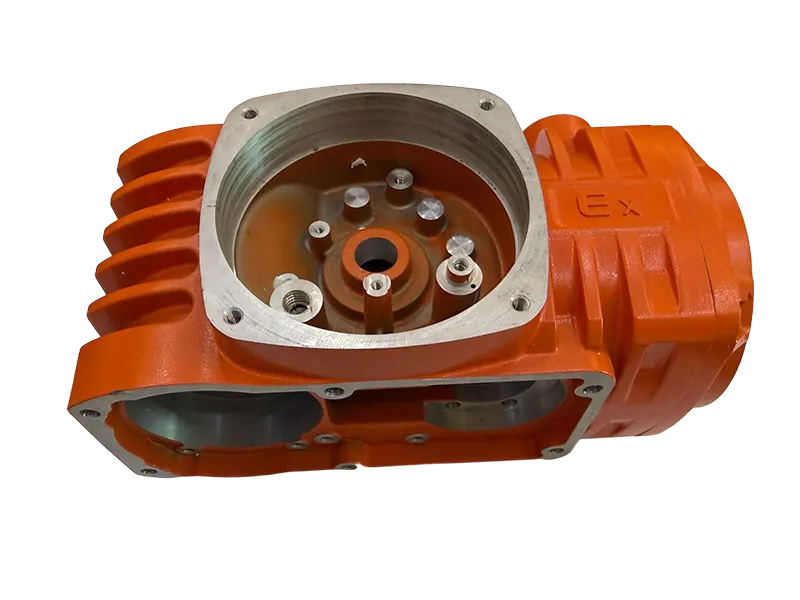
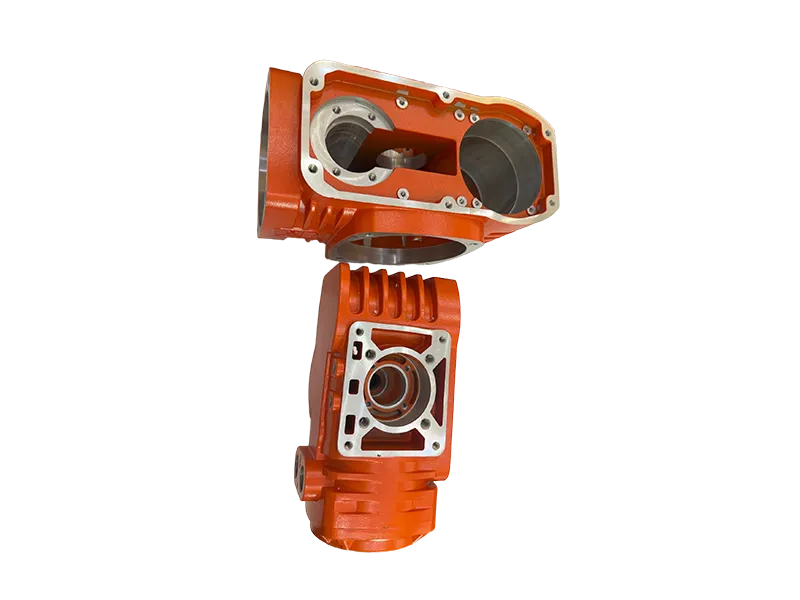
Finished Product Showcase



Case Summary
This case successfully solved the strict requirements of the explosion-proof box for flameproof surface accuracy, sealing performance, and machining reliability through customized tooling, hydraulic fixtures, and precision machining control.
| Technical Challenge | Solution | Result |
| Flameproof joint surface roughness and high flatness requirements | Customized PCD fine milling cutter + hydraulic floating fixture + separation of rough and finish machining processes | First-pass machining qualification rate of flameproof joint surface ≥99% |
| Sealing requirements of explosion-proof holes | Customized dedicated finishing tools for explosion-proof holes (with relief grooves), completed in one operation | Stable sealing performance and improved water pressure test pass rate |
| Clamping deformation of thin-wall parts | Hydraulic rotary cylinder multi-point floating clamping with accurately controllable clamping force | Clamping deformation controlled within 0.05 mm |
| Protection of flameproof joint surface during powder coating | Masking protection of flameproof surface after finish machining + removal and cleaning after powder coating | Clean flameproof surface without coating residue |
