
 English
  Arabic
  French
  German
  Italian
  Russian
  Spanish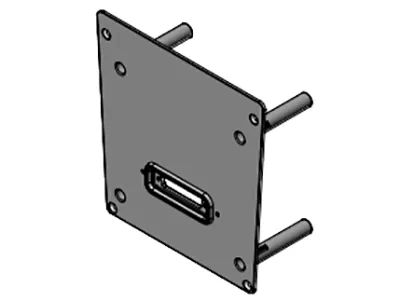
Case Overview
This case involves a musical instrument component consisting of two mating parts: a female base and a male base. The female base is the recessed mating end (socket end), while the male base is the protruding mating end (insertion end). The two parts form a visible connection/assembly structure on the musical instrument through insertion or locking.
The component is used in the musical instrument industry as a visible functional part on the instrument body or instrument stand. It must not only meet the required structural strength for use but also satisfy strict appearance quality requirements.
The basic structure of the component is formed through die casting, followed by machining to ensure mating accuracy, and finally powder coating to achieve a uniform and attractive surface finish.
Part Information
| Item | Parameter |
| Part Name | Musical Instrument Component (Female Base + Male Base) |
| Application Industry | Musical Instruments |
| Material / Grade | ADC12 |
| Product Dimensions | 168 mm × 171 mm × 72 mm |
| Product Weight | 265 g (Each) |
| Manufacturing Process Combination | Die Casting + Machining + Powder Coating |
| Surface Treatment Process | Powder Coating |
| Quality Inspection Method | Visual Inspection |
Project Difficulties and Technical Challenges
Core Challenge 1: Difficult Appearance Surface Protection and Strict Surface Quality Control
This product is a visible component of a musical instrument. The final product requires powder coating, and any scratches, dents, pressure marks, or other defects generated during die casting, machining, or handling will directly affect the appearance of the finished product.
The main challenges during the manufacturing process include:
- The surface of the die-cast blank must be free from defects such as flow marks, porosity, and flash that could affect the powder coating result;
- During machining, fixture contact must be controlled to avoid pressure marks or scratches on appearance surfaces;
- During transfer between multiple processes, collisions between products must be prevented to avoid appearance damage.
Therefore, the key challenge of this product is not simply achieving structural forming, but continuously maintaining the integrity of the appearance surfaces throughout the multi-process manufacturing process.
Core Challenge 2: Mating Accuracy Control Between the Female Base and Male Base
The product consists of two mating parts, a female base and a male base. After die casting, machining is required to ensure assembly accuracy between the two parts.
The main challenges include:
- The mating dimensions of the female base and male base must remain stable to avoid an excessively loose or tight fit;
- Dimensional variations in the die castings may affect subsequent machining allowance and mating performance;
- Variations in coating thickness after powder coating may also affect the final assembly clearance.
Therefore, the die casting, machining, and powder coating processes need to be coordinated to ensure the final assembly result.
Core Challenge 3: Appearance Protection During Multi-Process Transfer
The manufacturing process of this product is:
Die Casting → Machining → Powder Coating → Assembly
Since powder coating is the final appearance treatment process, any damage caused during preceding processes cannot be repaired through subsequent processing.
The following aspects require particular attention during manufacturing:
- Risk of dents and impacts during blank handling;
- Surface damage caused by machining and clamping;
- Transfer protection before and after powder coating;
- Damage caused by tools during assembly.
Solution
To meet the appearance quality requirements of the musical instrument component, this project adopted a full-process appearance protection solution.
Independent Blank Transfer
After die casting, the products are managed and transferred separately:
- Blanks are not mixed with other products;
- Dedicated trays or protective separators are used to prevent collisions;
- Independent transfer methods are used between processes to reduce handling damage.
This ensures that the blanks maintain good appearance quality before entering subsequent processes.
Machining Clamping Optimization
To reduce the impact of clamping on appearance surfaces, the machining method was optimized:
- Avoid direct fixture contact with major appearance surfaces;
- Preferentially use non-appearance surfaces for positioning and clamping;
- Control clamping force to prevent pressure marks.
This ensures that the appearance surfaces remain intact after machining.
Powder Coating and Post-Processing Control
To meet the appearance consistency requirements after powder coating, the coating process is controlled through the following measures:
- Cleaning surface contaminants before powder coating;
- Controlling coating uniformity;
- Protecting non-coated areas;
- Preventing surface damage caused by hangers and handling.
These measures ensure a stable and consistent appearance of the finished product.
Case Summary
This case focuses on a visible musical instrument component consisting of a female base and male base. Through a full-process appearance protection system covering die casting + machining + powder coating, the project successfully met the strict appearance quality requirements of the musical instrument industry.
| Technical Challenge | Solution | Result |
| High surface quality requirements for visible components | Independent blank transfer to reduce collision damage | Reduced the risk of appearance defects |
| Machining clamping may affect appearance | Optimized clamping positions to avoid contact with major appearance surfaces | Reduced clamping damage and pressure marks |
| High appearance consistency requirements after powder coating | Controlled powder coating process and handling protection | Ensured stable appearance of finished products |
| Mating requirements between female base and male base | Dimensional control through machining and assembly verification | Ensured proper assembly fit |
