
 English
  Arabic
  French
  German
  Italian
  Russian
  Spanish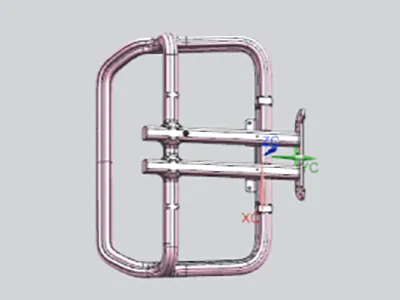
Case Overview
This case involves a robot handle, a handle component installed on the robot body for equipment movement, drag teaching, and manual operation. Since the handle is a visible exterior component of the robot and is directly touched by operators, it must not only meet structural strength and assembly reliability requirements, but also provide good surface texture, consistent powder coating, and a comfortable grip.
In this project, the basic housing is formed by ADC12 aluminum alloy die casting and then undergoes multiple processes including machining, powder coating, and assembly to produce the complete handle assembly. Compared with ordinary structural components, this product has higher requirements for appearance quality and process protection.
Part Information
| Item | Parameter |
| Part Name | Robot Handle |
| Application Industry | Robotics Equipment |
| Material / Grade | ADC12 Aluminum Alloy |
| Product Dimensions | 337 × 259 × 158 mm |
| Product Weight | 1.64 kg |
| Manufacturing Process Combination | Die Casting + Machining + Powder Coating + Assembly |
| Surface Treatment Process | Powder Coating |
| Quality Inspection | Installation Test (Assembly Verification / Functional Verification) |
Project Difficulties and Technical Challenges
Core Challenge: High Appearance Quality Requirements
Unlike ordinary structural components, the robot handle is an exterior component. It is located on the outer surface of the robot, is directly held and used by operators every day, and is also an important visual element of the robot’s overall industrial design. Therefore, the product has much higher surface treatment quality requirements than conventional castings. The main challenges include:
Die-Cast Surface Defect Control: Defects such as porosity, flow marks, cold shuts, flash, and die scratches may occur during the die casting process.
Appearance Protection During Multiple Processes: The handle needs to undergo multiple production processes. During transfer, clamping, and handling, the appearance surfaces are susceptible to dents, scratches, or fixture marks.
Appearance Consistency After Assembly: The robot handle is not a single component. After powder coating, it needs to be assembled with other components, so color differences between individual parts need to be controlled.
Solution
To address the challenges of the robot handle in terms of appearance quality, machining stability, and assembly consistency, this project adopted a manufacturing solution of dedicated transfer protection + appearance surface protection during machining + full-process quality control to ensure stable quality from the die-cast blank to final assembly.
1. Independent Blank Transfer and Appearance Protection
After die casting, the blanks are transferred independently using dedicated trays and protective separation measures to prevent appearance defects such as dents and scratches during handling and process transfer.
2. Machining Clamping Optimization
The machining positioning and clamping methods are optimized to reduce fixture contact with appearance surfaces and minimize the risks of clamping deformation and surface damage during machining.
3. Powder Coating Process Control
Pre-treatment before powder coating, coating thickness, color and gloss, and protection of non-coated areas are strictly controlled to ensure the appearance consistency and assembly quality of the finished robot handle.
Case Summary
| Technical Challenge | Solution | Result |
| High Surface Quality Requirements for Exterior Components | Independent Blank Transfer and Full-Process Protection | Reduced Risk of Dents and Scratches |
| Potential Appearance Impact from Clamping | Optimized Fixture Positioning Method | Prevented Damage to Appearance Surfaces |
| Multi-Process Consistency Control | Full-Process Management of Die Casting, Machining, Powder Coating, and Assembly | Ensured Batch Product Consistency |
| Assembly Reliability Requirements | Installation Test Verification | Ensured Normal Use on the Robot |
