
 English
  Arabic
  French
  German
  Italian
  Russian
  Spanish
 If you are in the die casting industry, you know quality control plays a vital role in ensuring that the final products meet stringent industry standards. Die casting is commonly used to produce complex parts with excellent surface finish and dimensional accuracy. However, without robust quality control processes in place, defects like porosity, shrinkage, and surface imperfections can arise, leading to higher rejection rates and increased costs.

In this article, we will discuss key strategies to implement an effective quality control system in die casting and how they can enhance product consistency and reduce defects.
Mold Design in Quality Control
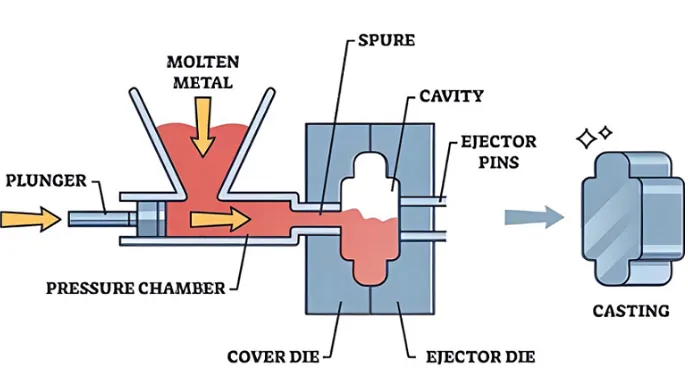
The mold is one of the most critical components in the die casting process. Poor mold design can lead to several defects such as misaligned parts, insufficient metal flow, and incomplete filling of the mold cavity. As part of the quality control process, the mold design should consider the following factors:
Material Flow
Ensuring the molten metal flows smoothly into all sections of the mold is essential to avoid cold shuts and incomplete fillings.
Cooling System Design
Proper cooling channels in the mold can help control solidification, reducing the risk of warping and other deformations.
Ventilation and Ejector Pin Placement
Adequate venting and strategic placement of ejector pins are crucial to prevent gas entrapment and ensure smooth ejection of the finished part.
Regular maintenance and inspection of molds should also be part of the quality control routine to minimize wear and tear, which can affect part accuracy over time.
Purity and Consistency Must Be Guaranteed
The quality of the metal alloy used in die casting significantly impacts the strength and finish of the final product. Impurities, excessive gas inclusion, and improper melting techniques can cause porosity, which weakens the part. Effective quality control in this aspect involves:
Metal Purification
Using techniques such as fluxing and degassing to remove unwanted gases and impurities before pouring the molten metal.
Temperature Monitoring
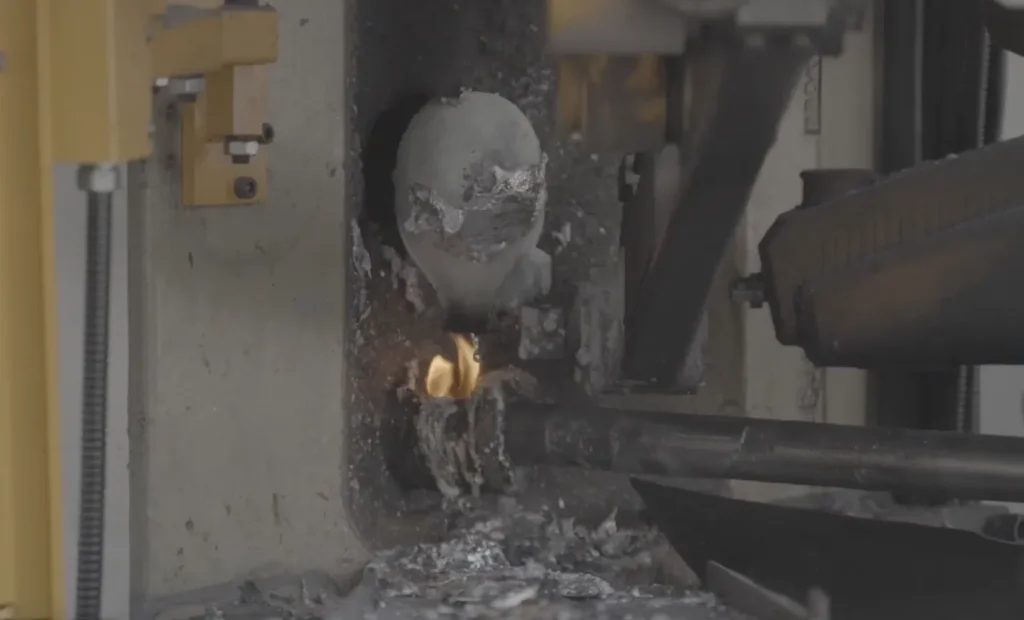
Maintaining the correct temperature throughout the process ensures that the metal flows smoothly and fills the mold cavity without forming defects like shrinkage or cold shuts.
Alloy Composition Control
Regular checks on the chemical composition of the alloy are necessary to ensure that it meets the required specifications for strength and corrosion resistance.
Using a closed-loop control system to monitor and adjust melting parameters can help maintain consistent metal quality during production.
Process Parameter Monitoring
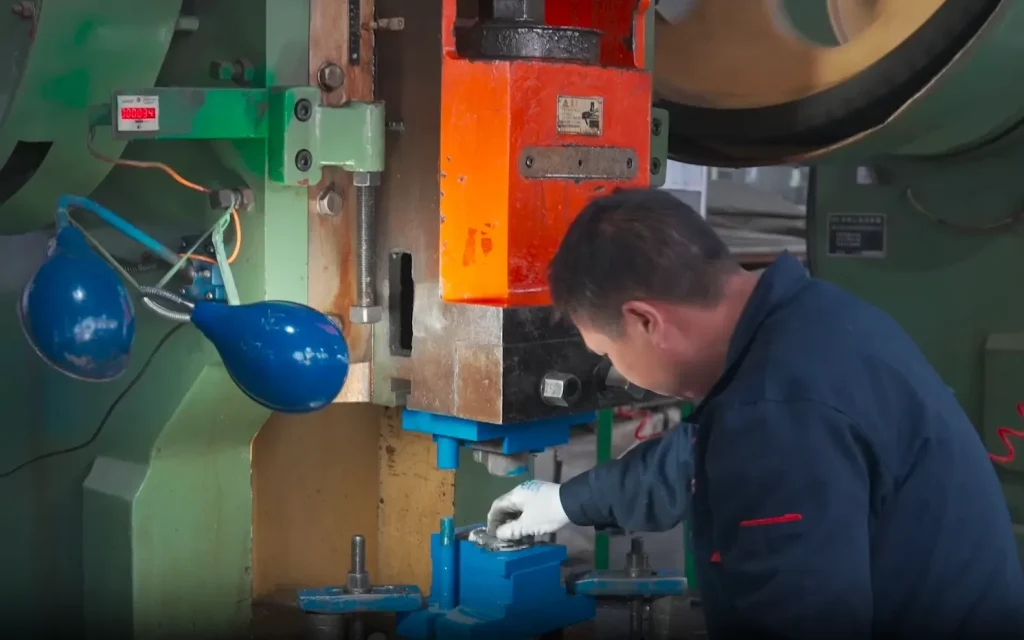
In die casting, several process parameters—such as injection pressure, injection speed, and mold temperature—need to be tightly controlled. Variations in these parameters can lead to defects like porosity, cracks, and rough surfaces. Automated monitoring systems that track these variables in real time help maintain optimal production conditions. For example:
Injection Pressure Control
Correct injection pressure ensures the molten metal fills the mold completely and evenly, minimizing the risk of air entrapment and cold shuts.
Speed Optimization
An optimized injection speed ensures that the metal reaches all parts of the mold cavity at the right time without causing turbulence, which could lead to defects.
Temperature Consistency
Monitoring both mold and metal temperatures helps prevent thermal shock, which can cause cracking and warping in the finished part.
By implementing real-time data tracking systems, manufacturers can make quick adjustments to ensure product quality remains high throughout production.
Defect Detection & Testing

Despite having rigorous control measures in place, defects may still occur. Detecting these defects early is critical to preventing defective parts from reaching the end user. Non-destructive testing (NDT) methods are commonly used in die casting to identify internal and surface-level defects without damaging the part. Common NDT methods include:
X-ray Inspection
This technique allows for a detailed examination of internal structures, helping to identify voids, cracks, or porosity.
Ultrasonic Testing
Ultrasonic waves can be used to detect internal defects, such as inclusions or voids, which may not be visible on the surface.
Dye Penetrant Inspection
This method is useful for detecting surface cracks and other surface-level defects in the cast parts.
By incorporating regular NDT testing into the production cycle, manufacturers can ensure that only defect-free parts move forward in the process.
Statistical Process Control (SPC)
Implementing Statistical Process Control (SPC) is a proactive approach to maintaining quality in die casting. SPC involves the use of statistical tools to monitor and control the manufacturing process. By analyzing data collected from various stages of production, SPC can detect variations that may indicate a problem before defective parts are produced.
Key elements of SPC include:
Control Charts
These help track variations in process parameters such as temperature, pressure, and cycle time, alerting operators to potential issues before they affect product quality.
Root Cause Analysis
When defects are detected, SPC tools can help identify the root cause of the problem, whether it’s a machine malfunction, material defect, or process variation.
By integrating SPC into the quality control process, manufacturers can achieve continuous improvement, reducing scrap rates and increasing overall production efficiency.
Conclusion
Effective quality control in die casting is essential to producing high-quality parts that meet industry standards. From mold design and metal purity to process monitoring and defect detection, every stage of the process must be meticulously controlled. Through this approach, companies can reduce waste, lower costs, and improve customer satisfaction. And if you are now looking for die casting service, contact Scojet and we will surely fulfill your needs.




