CUSTOM Magnesium Alloy Die Casting Company
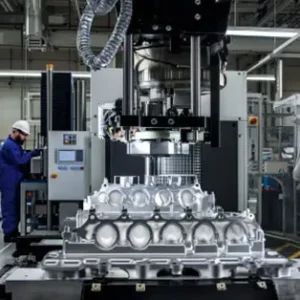
Magnesium Alloy Die Casting is a precision manufacturing technology that involves injecting molten magnesium alloy into precision molds to form complex and lightweight parts. This method allows for the accurate replication of intricate designs and is a key foundation for producing high-strength, lightweight products.
Magnesium Alloy Die Casting Advantages
1. Lightweight
The density of magnesium alloy is only 1.74 g/cm³, which is the lightest among all structural metals, 35% lower than aluminum and 75% lower than iron.
2. Excellent casting performance
Magnesium alloy has good fluidity and is easy to fill complex mold cavities. At the same time, its low solidification latent heat and rapid cooling characteristics enable it to be quickly formed during the die casting process, which allows for faster cycle times. However, due to its reactivity, special mold coatings or materials are often needed to maintain mold longevity.
3. Easy processing and surface treatment
The processing performance of magnesium alloy is better than other metals, such as aluminum alloy and steel. It can undergo various specialized surface treatments such as PEO (Plasma Electrolytic Oxidation) and electroplating to improve corrosion resistance.
4. High dimensional accuracy
Magnesium alloy die castings have high dimensional accuracy and low surface roughness, which are suitable for manufacturing precision parts, such as mobile phone shells, laptop shells, etc.
5. Energy saving and environmental protection
Magnesium alloy has a low melting point, low melting energy consumption, and high recovery rate, which meets the requirements of sustainable development. In addition, the die-casting process of magnesium alloy is more energy-efficient than that of aluminum, and the service life of magnesium alloy die-castings is long, reducing the need for maintenance.
6. Anti-electromagnetic interference ability
Magnesium alloy has better electromagnetic shielding performance than plastics and is comparable to aluminum, making it suitable for manufacturing parts that need to shield against electromagnetic interference, such as electronic equipment housings.
Custom Magnesium Alloy Die Casting Process
The magnesium alloy die casting process usually includes the following steps:
Step 1: Die preparation
The die consists of two halves, including the movable die and the fixed die, which need to be precisely machined to ensure surface quality and geometry.
Step 2: Melting and injection
The magnesium alloy is melted to a suitable temperature (usually 650-700°C) and then injected into the die cavity under high pressure (typically 40–120 MPa depending on the machine and process type).
Step 3: Solidification and cooling
The magnesium alloy cools and solidifies rapidly in the die, and the cooling rate directly affects the microstructure and mechanical properties of the casting.
Step 4: Demolding
The solidified casting is removed from the die.
Step 5: Finishing and processing
Remove excess material and perform subsequent processing to achieve design requirements.
Magnesium Alloy Types Used In Die Casting
AZ Series Alloys
AZ91D: This is one of the most commonly used magnesium alloys, with good castability, corrosion resistance and strength, and is widely used in automotive parts, communication equipment and medical equipment.
AZ81: Similar to AZ91D, but with slightly lower aluminum content, suitable for applications requiring higher ductility.
AM Series Alloys
AM60B: This alloy has good castability, strength and vibration damping capabilities, and is often used in parts such as car seat frames and panels.
AM50A: With high elongation and impact resistance, it is suitable for car seats and other parts that require high toughness.
AE Series Alloys
AE42: This alloy has excellent strength and creep resistance at high temperatures, and is suitable for high temperature environments such as engine parts.
AS41B: With superior high temperature resistance and good creep resistance, it is also commonly used in engine parts.
Other Alloys
AM31B: Though primarily a wrought alloy, AM31B has modified variants that can be used in specific die casting applications requiring enhanced mechanical performance.
AS31: An alloy containing silicon and strontium, suitable for high temperature applications.
Magnesium Alloy Die Casting Process Features
High Fluidity and Thin-Wall Forming Capability: Magnesium alloy melt has low viscosity and excellent flowability, allowing it to fill complex mold cavities and produce parts with wall thickness as low as 0.5mm. This makes it ideal for precision structural molding, such as the enclosures for 3C electronic products (e.g., laptop bottom shells, phone heat sinks).
Fast Solidification Characteristics: The solidification speed of magnesium alloy is 1.5 times faster than that of aluminum alloys, with low latent heat of crystallization. This reduces the production cycle by 40-50%, and in some scenarios, efficiency can be twice that of aluminum die casting.
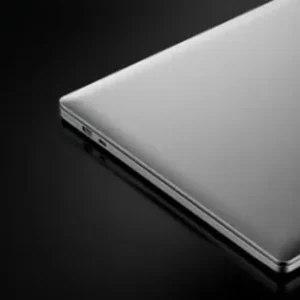
Recommended Case: Application of magnesium alloys in laptop enclosures.
High-pressure and high-speed filling with typical injection speeds of 6-8 m/s (cold chamber die casting machine), and gate speeds exceeding 80 m/s. Combined with high pressure (40-70 MPa injection pressure), this enables dense molding, making it especially suitable for complex parts.
Recommended Case: Application of high-pressure, high-speed filling technology in automotive components.
The process can be precisely temperature controlled.
Melt Temperature: Approximately 640°C for hot chamber die casting and about 680°C for cold chamber die casting.
Mold Temperature: Ranges from 180-250°C, requiring the use of a dynamic temperature control system to reduce thermal deformation.
Long Mold Life: Magnesium alloys have a low thermal shock to molds and do not stick to the mold. After processes like nitriding, the mold life is improved by more than 30% compared to aluminum die casting.
Energy-saving and Environmentally Friendly Features: Energy consumption is 30% lower than aluminum die casting, and waste can be 100% recycled. The production process has near-zero emissions of waste gases.
High Dimensional Accuracy: The shrinkage rate is stable (0.5-0.7%), with low ejection force. Dimensional accuracy is 50% higher than aluminum die casting, and tolerances can be controlled within ±0.05mm.
Low Defect Rate: Controlled through vacuum die casting technology (porosity ≤ 1%) and mold flow analysis to optimize the gating system, significantly reducing defects such as porosity and cold shuts.
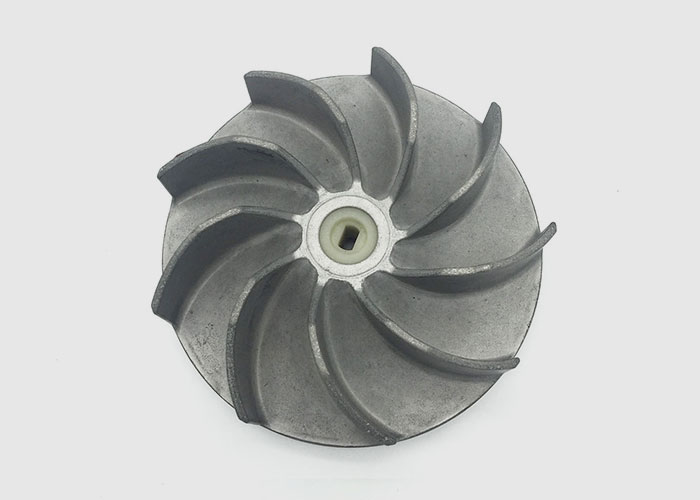
Multi-field Lightweight Solutions: Suitable for various industries such as automotive (shock tower, steering wheel bracket), aerospace (engine impeller), and 3C electronics (heat sinks), achieving a weight reduction of 20-60%.
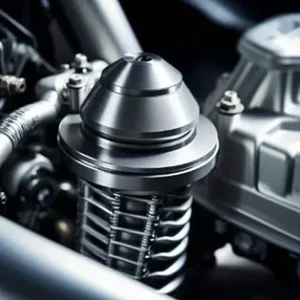
Recommended Case: Application of magnesium alloys in automotive shock towers.