
 English
  Arabic
  French
  German
  Italian
  Russian
  Spanish
 High pressure aluminum die casting is a manufacturing process used to make precise, repeatable metal parts from molten aluminum alloy. The molten metal is injected into a steel die at high speed and pressure, then cooled, ejected, trimmed, and finished. For production teams, the process is attractive because it can produce thin walls, complex shapes, smooth surfaces, and stable dimensions in medium or high-volume production.
Scojet provides custom die casting services for OEM metal parts and also offers aluminum alloy die casting support for projects that need tooling, casting, CNC machining, surface finishing, and quality inspection within a single unified supply chain.
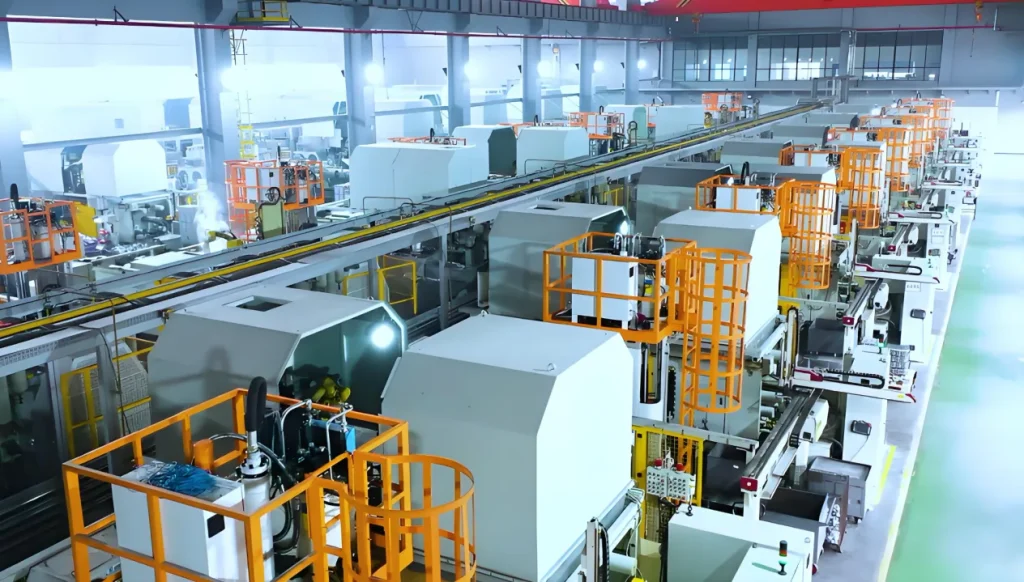
What is high pressure aluminum die casting?
High pressure aluminum die casting uses a reusable steel mold, often called a die, to form aluminum alloy parts. After the alloy is melted, the machine injects the metal into the die cavity under pressure. Once the metal solidifies, the die opens and the part is ejected.
This method is different from gravity casting, where molten metal fills the mold mainly by gravity. It is also different from sand casting, which uses expendable sand molds, and investment casting, which is often selected for smaller, complex parts with different cost and volume considerations. High pressure die casting is usually chosen when the part requires production speed, repeatability, and a good surface finish.
Aluminum is widely used because it offers a useful balance of low weight, strength, corrosion resistance, machinability, and thermal performance. These qualities make aluminum die casting suitable for automotive, industrial, electrical, lighting, and hardware applications.
How the process works
The process starts with part review and die design. Engineers plan the parting line, gates, runners, vents, ejector pins, cooling channels, and machining allowance.
Good tooling design helps control filling, shrinkage, porosity risk, and part removal.
During production, aluminum alloy is melted and injected into the die at high speed. Holding pressure helps feed the cavity as the metal cools. After solidification, the part is ejected and the runner, overflow, and flash are trimmed. Depending on the part requirements, secondary operations may include deburring, CNC machining, drilling, tapping, powder coating, painting, plating where applicable, or assembly.
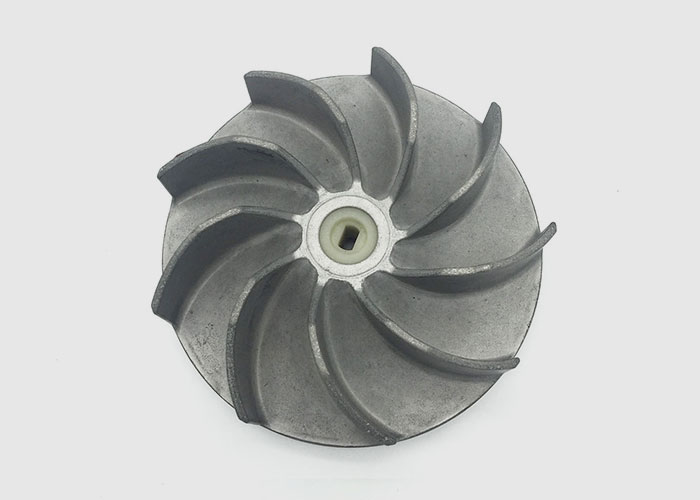
Main advantages of high pressure aluminum die casting
- Fast production cycle for repeated parts after tooling is complete.
- Good dimensional accuracy for complex aluminum components.
- Ability to form thin walls, ribs, bosses, and integrated features.
- Smooth cast surface that can reduce finishing work.
- Lower unit cost for medium and large production runs compared with many low-volume casting methods.
Common aluminum alloys used in high pressure die casting
Material choice affects strength, corrosion resistance, machinability, pressure tightness, thermal behavior, and cost. Common aluminum die casting alloys include A380, ADC12, A360, A413, AlSi9Cu3, and EN AC-46000. A380 is widely used because it offers balanced castability, strength, and cost. ADC12 is common in Asian manufacturing for general housings, brackets, and machinery parts. A360 is often considered when better corrosion resistance is needed. A413 is known for good fluidity and pressure tightness. AlSi9Cu3 and EN AC-46000 are common in European automotive and industrial applications.
| Alloy | Typical strengths | Common use |
| A380 | Balanced strength, castability, and cost | Automotive, housings, brackets, machinery parts |
| ADC12 | Good castability and machinability | General die cast aluminum parts |
| A360 | Better corrosion resistance than many standard alloys | Outdoor or fluid-related components |
| A413 | Good fluidity and pressure tightness | Leak-resistant or thin-wall parts |
| AlSi9Cu3 / EN AC-46000 | Versatile strength and casting performance | Automotive and industrial components |
Typical applications
High pressure aluminum die casting is common in automotive housings, brackets, transmission parts, engine-related components, and EV parts. It is also used for industrial pump bodies, gearbox housings, machinery covers, heat sinks, electrical enclosures, connectors, LED lighting housings, and hardware.
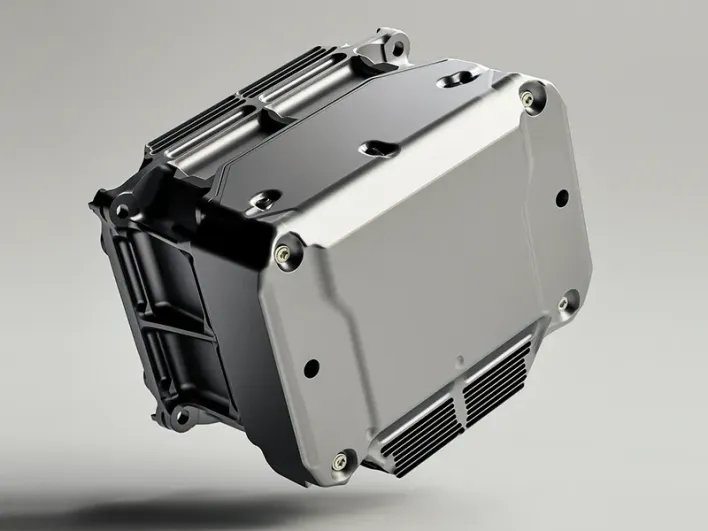
Design tips for better aluminum die cast parts
Good part design improves casting quality and reduces tooling changes. Keep wall thickness as even as possible, and use ribs instead of thick solid sections where strength is needed. Add proper draft angles so the part can be ejected cleanly. Avoid sharp internal corners because they can create stress concentration and filling problems. Plan the parting line, ejector locations, and machining surfaces early. If tight tolerances are required, leave machining allowance for CNC finishing. Bosses, ribs, and holes should be designed with filling, cooling, and ejection in mind.
High pressure aluminum die casting vs other casting methods
| Method | Best for | Main advantage | Limitation |
| High pressure die casting | Medium to high volume precision parts | Fast cycle and good repeatability | Higher tooling cost |
| Gravity die casting | Medium volume parts with simpler filling needs | Good mechanical potential | Slower than high pressure die casting |
| Sand casting | Large parts or low volume production | Lower tooling cost | Rougher surface and wider tolerances |
| Investment casting | Small complex parts | High detail capability | Higher unit cost for many applications |
How to choose a high-pressure aluminum die casting supplier
A capable supplier should understand both casting and downstream finishing. Check whether the supplier can support die design, aluminum alloy selection, mold manufacturing, casting, trimming, CNC machining, and surface treatment. Ask how they inspect dimensions, surfaces, and critical features. It also helps to review export experience and similar project examples.
Scojet supports custom manufacturing from prototyping to production. If you need custom die casting services or aluminum alloy die casting, the company can help with engineering review, production planning, CNC machining, finishing, and quality control. Its 35+ surface finishes and 80+ metals and plastics also make it easier to compare material and finishing options across a broader project.
Practical production considerations
Before launching a high-pressure aluminum die casting project, review the complete production route rather than only the casting step. The part drawing should identify cosmetic surfaces, machined surfaces, sealing areas, threads, mounting holes, and any areas where porosity cannot be accepted. These details affect gate location, venting, machining allowance, inspection methods, and finishing choices. It is also helpful to discuss expected annual volume, target cost, packaging, and delivery requirements before the die is built, because these points may change the tooling layout or secondary operation plan.
For aluminum components that need powder coating, painting, plating, or assembly, early communication can prevent rework. A supplier that understands casting, CNC machining, and surface treatment together can usually give more practical design feedback than a supplier that only quotes the casting weight.
FAQ
What is the difference between die casting and high pressure die casting?
Die casting is a general term for casting metal in a die. High pressure die casting specifically injects molten metal into the die under high pressure and is used for fast, repeatable production.
Which aluminum alloy is best for die casting?
There is no single best alloy for every part. A380 and ADC12 are common choices, while A360, A413, and AlSi9Cu3 may be selected for specific corrosion, pressure tightness, or regional requirements.
Is aluminum die casting strong?
Yes, aluminum die cast parts can provide good strength for many housings, brackets, and structural components when the alloy, design, tooling, and process are suitable.
What tolerances can aluminum die casting achieve?
Tolerance depends on part size, geometry, tooling, alloy, and post-machining requirements. Critical dimensions should be confirmed with the supplier before tooling starts.
Is high pressure die casting suitable for small batch production?
It can be used for smaller batches, but the tooling cost usually makes it more economical for medium and large production runs. For prototypes or very low volumes, other processes may be more practical.
Conclusion
High pressure aluminum die casting is a practical process for producing light weight, precise, and complex metal parts at repeatable production volumes. It works well for automotive, industrial, electrical, lighting, and hardware components when the alloy, part design, die structure, and finishing plan are considered early. For buyers who need aluminum die casting parts with engineering support, machining, surface finishing, and inspection, Scojet can provide a custom manufacturing path from design review to finished components.




