
 English
  Arabic
  French
  German
  Italian
  Russian
  Spanish
 Custom Thin Wall Investment Casting Service Manufacturer
Thin Wall Investment Casting is a metal casting process used to produce complex parts with thin-walled structures. This process uses a wax pattern as a model and coats its surface with a ceramic slurry to form a refractory mold, which is then replicated by melting metal. Thin wall investment casting is widely used because it can produce parts with high precision, smooth surfaces and complex geometries.
Applications of Thin Wall Investment Casting
Thin walled investment casting is particularly suitable for manufacturing parts that require light weight, high strength and high precision.
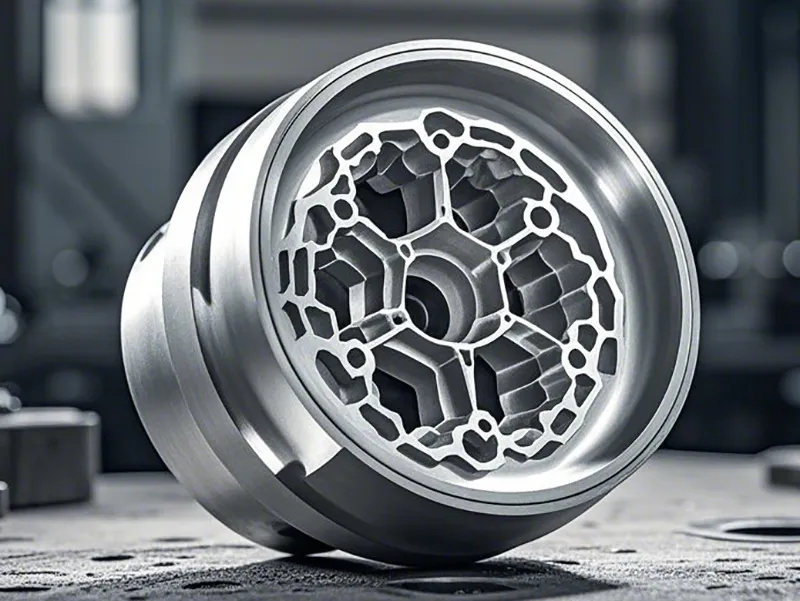
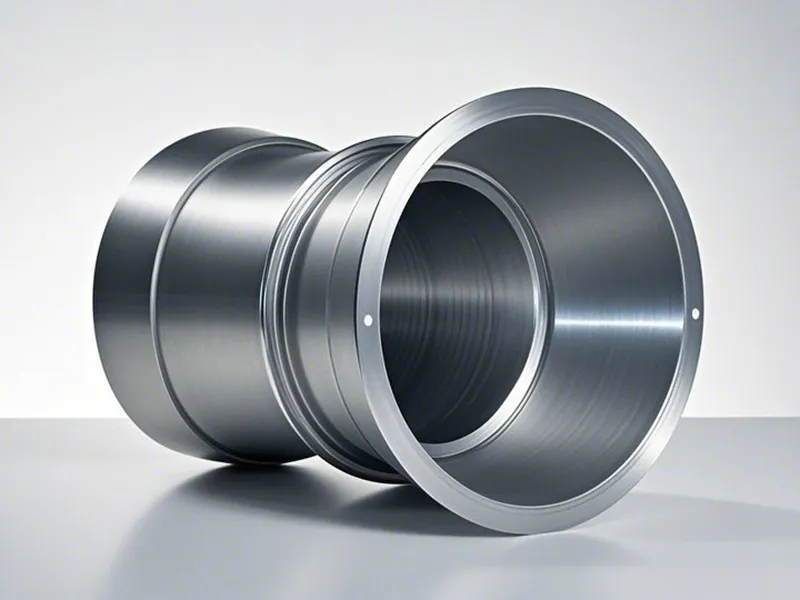
In the Automotive Industry
Thin wall investment casting is used to produce engine components, transmission parts and lightweight body components. These parts usually require a wall thickness of less than 3 mm to reduce weight and improve fuel efficiency.
For example, components such as main pump bodies, gearboxes and exhaust manifolds have achieved significant weight reduction by optimizing material and process parameters while maintaining high strength and durability.
In addition, this technology is also used to manufacture lightweight crankshafts and bearing seats, which further reduce weight and improve performance through hollow design and the use of high-strength cast iron (ADI).
Medical Industry
Thin wall investment casting enables the production of medical devices and implants with complex geometries, such as dental crowns, implants, and endoscope components. These parts often require high precision and smooth surfaces to ensure safety and functionality.
Electronic Equipment
Thin wall investment casting is mainly used to manufacture housings and precision components for small electronic devices. For example, it is able to produce components such as electronic housings and radiators with high precision and complex geometries, which usually require extremely small wall thickness and high surface quality to meet the needs of electronic devices for lightweight and high performance.
Other Industries
Thin wall investment casting is also widely used in energy, chemical and other industries. For example, in the energy industry, it is used to manufacture high-temperature heat-resistant parts. In the chemical industry, it is used to produce corrosion-resistant pumps and valves and other components.
Thin Wall Investment Casting Parameters
| Parameter Category | Typical Scope/Requirements | Optimization Direction And Description |
| Mold and Shell Parameters | ||
| Mold Shell Preheating Temperature | Aluminum alloy: 650-700°C Magnesium alloy: 300°C Stainless steel: 950-1180°C | Too high a temperature leads to coarse grains, too low is difficult to fill; need to be adjusted according to the type of alloy, such as stainless steel need to be high-temperature anti-cooling compartment. |
| Number Of Layers Of Mold Shell | 3-5 layers (aluminum alloy) 6 ½ layers (stainless steel impeller) | Too many layers increase the residual strength, too few reduce the strength; aluminum alloy commonly used 3 layers, complex parts (such as impellers) need to increase the number of layers. |
| Mold Shell Material | Zircon sand (top coat), silica sol binder | Zircon sand improves surface finish, silica sol enhances shell strength; complex areas need to be pre-wetted to prevent air bubbles. |
| Pouring Parameters | ||
| Casting Temperature | Aluminum alloy: 730-740°C Magnesium alloy: 750°C Stainless steel: 1610-1620°C | Too high a temperature is easy to oxidize, too low leads to cold segregation; thin-walled parts need a slightly higher temperature to ensure that the mold filling, but need to cooperate with the pressurized solidification to prevent air holes. |
| Filling Speed | Magnesium alloy: 250-280 mm/s (differential pressure 50-80 kPa) Stainless steel: fast filling type | High-speed filling reduces cold segregation, but turbulence needs to be avoided; thin-walled parts are prioritized to use bottom injection or slit sprue design. |
| Pressure Solidification Parameters | Pressure kettle pressurization: 0.4-0.6 MPa Holding time: 10 minutes | Pressurization improves gas solubility and reduces pinholes; suitable for castings of aluminum alloys and magnesium alloys with high densification requirements. |
| Structural Design Parameters | ||
| Casting Systems | Bottom-feeding type (goose-shaped straight sprue) Slotted sprue (magnesium grating) Gates with subsidized inner sprue (impeller) | Bottom-injection type prevents oxidation slagging; slit sprue reduces lateral flow distance; inner gate allowance enhances make-up shrinkage. |
| Riser Design | Top placed to form a thicker top and thinner bottom structure | Use of risers to compensate for shrinkage and avoid shrinkage at thin walls; need to optimize position in conjunction with simulation. |
| Post-Processing Parameter | ||
| Hot Treatment (e.g. of metal) | Solid solution treatment: 530-550°C (aluminum alloys) Ageing treatment: 160-170°C (aluminum alloys) | Improve mechanical properties; thin-walled parts need to control the cooling rate (such as water cooling) to prevent deformation. |
| Shelling and Cleaning | Vibratory machine dehulling + manual cleaning (complex areas) | The residual strength of the mold shell needs to be moderate, and the 3-layer mold shell is easy to decorticate but requires manual cleaning in narrow areas. |
| Quality Indicators | ||
| Dimensional Tolerances | ±0.3 mm (aluminum alloy) Class CT4-6 (general purpose for investment casting) | Thin-walled parts with high symmetry requirements (e.g. center symmetry ≤ 0.15) require optimized molds and shrinkage compensation. |
| Surface Roughness | Ra ≤3.2 μm | The high finish is dependent on the shell facing material (e.g. zirconia sand) and the precision of the wax mold. |
| Internal Flaw | Pinhole degree ≤ 2 grade (X-ray inspection) No shrinkage holes, cracks | Pressurized solidification, optimization of pouring temperature and mold shell preheating temperature are key. |
Features of Thin Wall Investment Casting
Thin-wall capability: The process can produce parts with a minimum wall thickness of 1mm to 2mm, and even thinner wall thicknesses can be achieved.
Complex geometries: Thin wall investment casting is able to produce parts with complex cavities, small holes and curves, which are usually difficult to achieve through other casting methods (such as sand casting or forging).
Light weight: Due to the reduced amount of material used, parts produced by thin wall investment casting are generally lighter than traditional casting parts, which helps to reduce the weight of the overall structure.
High precision and smooth surface: Thin wall investment casting is able to provide high-precision dimensional tolerances and smooth surface quality, which allows the parts to be used directly without further processing.
Wide material applicability: The process is suitable for a variety of metal materials, including carbon steel, stainless steel, aluminum alloy, copper alloy, titanium alloy, etc.
Challenges of Thin Wall Investment Casting
Process complexity: Thin wall investment casting requires higher process control accuracy, including mold design, gating system design and cooling control.
Defect risk: Since thin-walled structures are susceptible to thermal stress and uneven cooling, defects such as shrinkage holes and cracks may occur.
High cost: Although thin wall investment casting can reduce material waste and improve production efficiency, its initial mold making cost is high and the production cycle is long.
Challenges of Thin Wall Investment Casting
Process complexity: Thin wall investment casting requires higher process control accuracy, including mold design, gating system design and cooling control.
Defect risk: Since thin-walled structures are susceptible to thermal stress and uneven cooling, defects such as shrinkage holes and cracks may occur.
High cost: Although thin wall investment casting can reduce material waste and improve production efficiency, its initial mold making cost is high and the production cycle is long.
FAQ
Yes, we utilize the industry-leading silica sol investment casting process, equipped with 3D-printed wax pattern technology (e.g., 3DPTEK series printers), achieving a precision of 0.05 mm and supporting a minimum wall thickness of 1.5 mm.
Combined with semi-automatic hydraulic wax injection machines and medium-temperature wax materials, our wax patterns maintain dimensional stability with shrinkage controlled within ±0.6%.
In ceramic coating, we apply nanoscale multilayer ceramic shell technology (Al₂O₃/SiO₂ coatings) via roll-to-roll sputtering to create ultrathin coatings (≤5 μm), enhancing thermal stability and ionic conductivity. Our self-healing nano-coating technology further improves corrosion resistance and surface finish
We specialize in thin-walled castings across materials and processes:
Aluminum alloys: Pressure-controlled casting technology enables stable production of 0.5–3.0 mm thin-walled parts (e.g., automotive engine housings).
Magnesium alloys: Low-pressure investment casting achieves 2.5–3.0 mm grille components (case: Changzhou Jinxi Titanium).
Titanium alloys: Precision welded pipes with Φ6.3 mm ultra-thin diameters.
Minimum thickness milestone: Successfully cast 2 mm stainless steel thin-walled shell components using gas-venting techniques to eliminate porosity
Our full-process precision casting capabilities support complex geometries:
3D-curved aerospace components: 3 mm wall thickness with ±0.3 mm tolerance, validated by X-ray inspection for structural integrity.
Large-scale cast iron parts: 3D-printed sand molds increase internal density by 80% , ideal for energy equipment like nuclear valve castings14.Dimensional accuracy meets CT4-6 standards (international), with 0.5 mm minimum casting hole diameter
Yes, we have delivered thin-walled castings across industries:
Automotive : 4.5 mm ductile iron chassis control arms with optimized thermal stress distribution.
Aerospace : Titanium alloy 3D-curved components for engine fuel systems.
Material diversity :
Light alloys : Aluminum (A380/ZL101), magnesium (ZM6), titanium (Ti-6Al-4V).
Specialty steels : 316L stainless steel, heat-resistant alloys (Inconel 718).
Composites : Carbon fiber-reinforced aluminum matrix composites (aerospace applications).
Testing Equipment: Coordinate measuring machines (CMM) and X-ray flaw detectors ensure ±0.3 mm dimensional accuracy and ≥99.9% defect detection rate.
Certifications: Compliant with IATF 16949/ISO 14001, meeting EU and US market requirements