Custom Zinc Alloy Die Casting Service Manufacturer
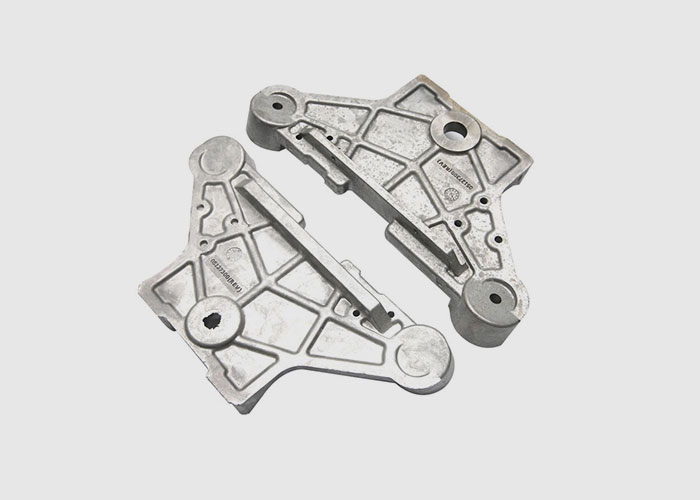
Zinc Alloy Die Casting is a metal casting process that involves injecting molten zinc alloy into pre-prepared steel molds. Under high pressure, the mold cavities are quickly filled, and the desired part shapes are formed after cooling. This process can be used to manufacture a variety of parts, such as gears, connectors, decorative components, enclosures, and more.
Zinc Alloy Die Casting Advantages
1. High Strength and Durability
Zinc alloys offer excellent toughness and impact resistance, particularly in comparison to other commonly die-cast materials like aluminum.
2. High Precision and Dimensional Stability
Zinc alloy die casting can achieve extremely high dimensional accuracy and tolerance control, usually reaching an accuracy of ±0.001 inches (about 0.025 mm).
3. Low Melting Point and Efficient Production
The low melting point of zinc alloy (about 420°C) makes it easy to melt and cool, thereby shortening the production cycle and improving production efficiency.
4. Reduce Processing Requirements
Zinc alloy die casting has excellent “net forming” capabilities, which can directly produce parts close to the final shape, minimizing machining requirements and reducing post-processing costs.
5. Cost-effectiveness
Compared with aluminum and magnesium alloys, zinc alloy die casting has lower raw material costs and higher production speeds. In addition, the low-temperature casting characteristics of zinc alloy reduce mold wear and extend mold life, further reducing long-term production costs.
Custom Zinc Alloy Die Casting Process
The basic process of zinc alloy die casting process includes the following steps:
Step 1: Mold preparation
First, clean the mold thoroughly, remove impurities, and apply lubricant to ensure easy demolding of the finished product and extend the life of the mold.
Step 2: Melt the zinc alloy
Heat the zinc alloy to the melting point (about 400℃) to make it liquid.
Step 3: Injection and cooling
The molten zinc alloy is injected into the mold under high pressure and held during solidification to ensure complete cavity filling and dimensional stability.
Step 4: Mold opening and removal
After the casting is cooled, the mold is opened and the casting is removed.
Zinc Alloy Types Used In Die Casting
Traditional Zamak Alloys
Zamak alloys are the most commonly used type in zinc alloy die casting and are divided into the following categories:
Zamak 2: Contains copper and has higher strength, but is slightly more expensive.
Zamak 3: Widely used and favored for its good flowability, dimensional stability and excellent impact resistance.
Zamak 5: Compared with Zamak 3, it has higher tensile strength but slightly lower toughness, suitable for applications requiring higher strength.
Zamak 7: A high-purity alloy suitable for decorative applications with high surface quality requirements.
ZA Alloy (Zinc-Aluminum Alloy)
This is a new type of zinc alloy developed in recent years with higher aluminum and copper contents, as well as improved magnesium content. The ZA series includes:
ZA-8: With an aluminum content of 8% and a copper content of 1%, it has the lowest aluminum content and melting point and is suitable for hot chamber die casting.
ZA-12: With an aluminum content of 12%, it has higher strength and wear resistance.
ZA-27: With an aluminum content of 27%, it is suitable for applications requiring higher strength.
Zinc Alloy Die Casting Process Features
Low Melting Point and High Fluidity: Zinc alloy has a melting point of around 400°C, with low viscosity and excellent flowability, allowing it to fill complex mold cavities. It can produce precision parts with wall thickness as low as 0.5mm (such as electronic enclosures, handles, etc.). This characteristic makes it significantly superior to aluminum and magnesium alloys in the production of thin-walled parts.
Anti-Sticking and Corrosion Resistance: Zinc alloy melt does not adhere to iron molds during die casting and has low corrosiveness to molds. After nitriding treatment, mold life can be improved by more than 30%.
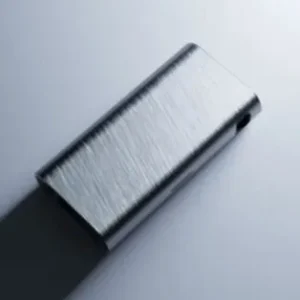
Recommended Case: Application of zinc alloys in electronic enclosures.
High-Speed and Efficient Production: Zinc alloy solidifies quickly, reducing the production cycle by 40-50% compared to aluminum alloys. It is particularly suitable for large-scale mass production of medium and small parts (such as hardware accessories, connectors, etc.).
Energy-Saving and Environmentally Friendly Features: Energy consumption is 30% lower than aluminum die casting, and waste can be 100% recycled and reused. The production process has near-zero emissions of waste gases.
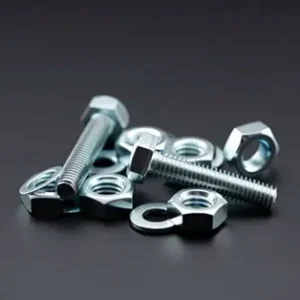
Recommended Case: Application of zinc alloys in hardware accessories.
High Precision and Low Defect Rate:
Dimensional tolerances can be controlled within ±0.05mm, with surface roughness reaching Ra 1.6μm, reducing the need for subsequent processing.
By optimizing the gating system (such as tapered runner design) and using vacuum die casting technology, porosity is significantly reduced.
Excellent Surface Treatment Compatibility:
Zinc alloy die-cast parts can be directly electroplated, sprayed, polished, etc., meeting the needs for automotive chrome trim, high-end electronic enclosures, and other applications.
Recommended Case: Application of zinc alloys in automotive chrome trim.
Construction: Door handles, railing components, decorative parts, etc.
Automotive & Transportation: Gears, brake drums, shock absorber components.
3C Electronics: Laptop enclosures, antennas, heat sinks.
Medical Equipment: Surgical tools, implant enclosures.
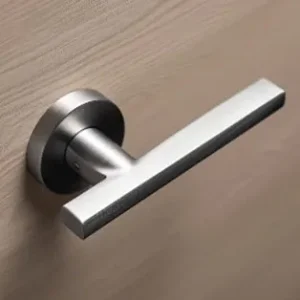
Recommended Case: Application of zinc alloys in door handles.